Cyber Monday Sale On Plus Size Shirts
Shop Cyber Monday deals on plus size shirts, including denim button-fronts, plaid flannel shirts, and poplin button-downs. Choose sleeve lengths and silhouettes with your workdays, weekends, and favorite layers in mind. Your stylist knows a 1X varies by brand and can help you navigate those fit differences.
-
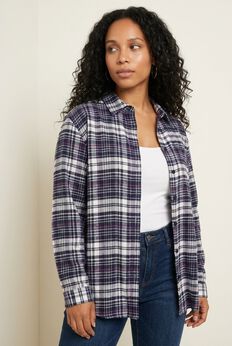
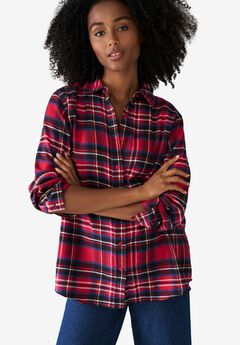 A red cotton flannel shirt with yarn-dyed plaid, button cuffs, shirttail hem, and an easy inverted back pleat.What customers like:Attractive plaid design and colors Easy care and washes well Soft and comfortable fabric Roomy, flattering fit Good for layering and versatile wear
-
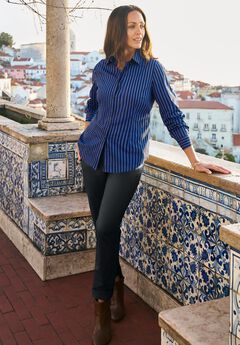 A crisp black stretch cotton poplin shirt with hidden bust snaps for a polished, gap-free fit.What customers like:Flattering and tailored fit Crisp, professional appearance Versatile wardrobe staple Comfortable stretch fabric Secure snaps prevent gaping
-
 An oversized cotton denim shirt with a relaxed silhouette and pearlized button details.What customers like:Good denim quality Easy to care for Well-made design Versatile style Comfortable fit
-
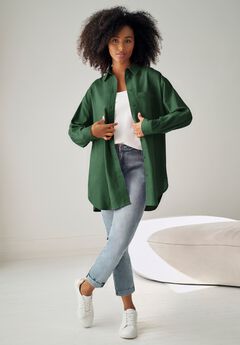 An oversized green and midnight linen-blend shirt featuring pearlized buttons and a curved hi-low hem.
-
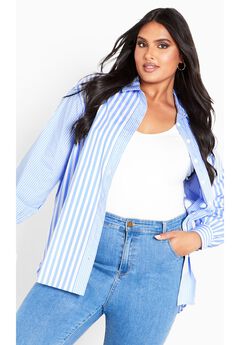 A blue poplin shirt in size 16, perfect for effortless style and easy machine washing.
-
 An elegant red lace shirt featuring a V-neckline, full-length sleeves, and included cami.
-
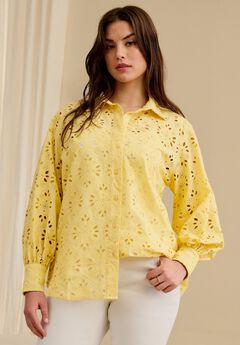 An oversized cotton eyelet shirt featuring blouson sleeves, classic collar, and a button-front placket.
-
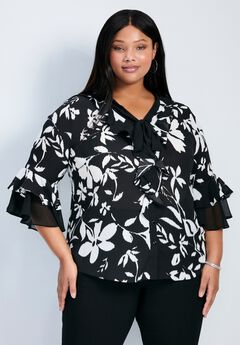 A double georgette shirt with frill detailing, machine washable and available in size 30/32.
-
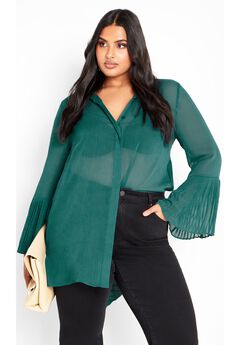 A semi-sheer polyester shirt featuring pleated bell sleeves, a collared neckline, and a hi-lo hemline.
-
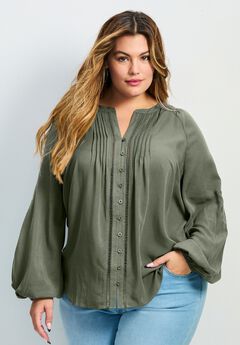 An olive crosshatch viscose shirt featuring embroidered sleeves, pintuck detailing, and delicate lace trim.
-
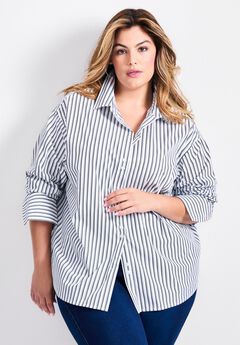 A classic striped button-through shirt in soft cotton blend poplin with dropped shoulders and wide cuffs.
-
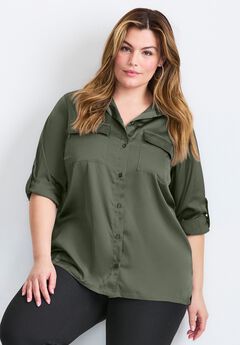 A polished olive button-front shirt with chest flap pockets and roll-tab sleeves for versatile style.
-
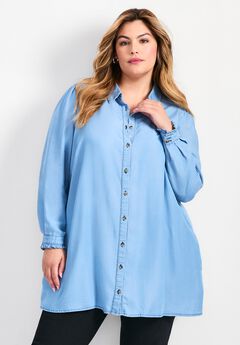 A supersoft lyocell chambray shirt with tortoiseshell buttons and ruffle-detailed long sleeves.
-
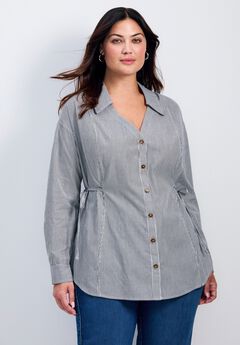 A chic black and white striped cotton shirt with a waist-cinching tie and V-neckline.
-
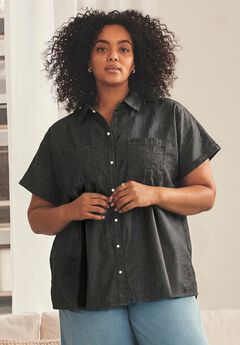 A lightweight black chambray shirt crafted from breathable cotton with dolman sleeves and chest pockets.
-
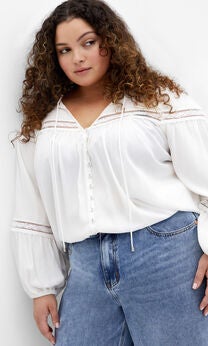 An ivory shirt with eyelash trim lace, optional tie front, and relaxed silhouette for comfort.
-
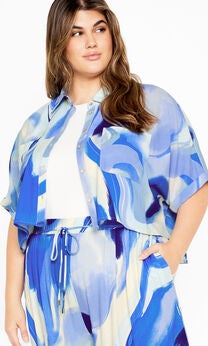 A bold blue print shirt with a cropped fit, batwing sleeves, and a hi-lo hemline.
-
 A chic viscose twill shirt with pintuck detailing, mandarin collar, and elasticated cuffs.
-
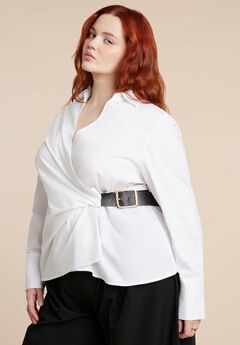 A crisp white cotton poplin shirt featuring a wrap design, button cuffs, and a faux leather belt.
-
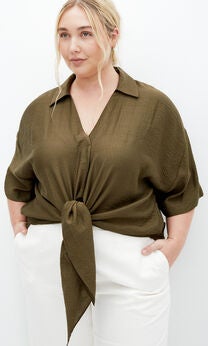 A stylish khaki shirt featuring a self-tie front, short sleeves, and a relaxed fit.
-
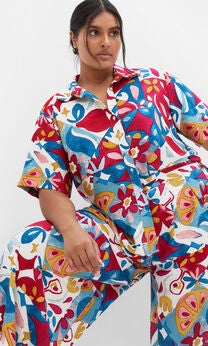 A relaxed-fit blue shirt featuring a striking mosaic print, collared neckline, and short sleeves.
-
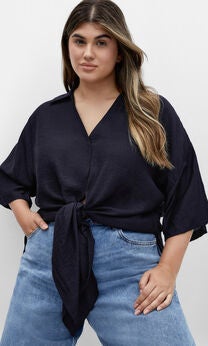 A navy shirt featuring a self-tie front, short sleeves, and a relaxed fit for effortless style.
-
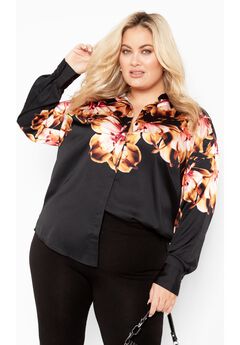 A pink faux-silk shirt with a collared neckline and full-length sleeves for sophisticated flair.
-
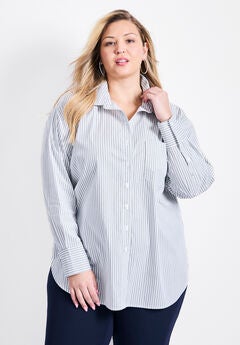 A chic white and navy striped poplin shirt with a relaxed fit and timeless collared neckline.
Cyber Monday Sale On Plus Size Shirts
Frequently Asked Questions
Start with your weekly routine, noting where your current shirts leave you wanting more outfit options. Share those gaps with your stylist so your choices reflect your schedule and personal style.
Pair your button-down with tailored trousers, then add loafers for an easy weekday outfit. Your stylist can help you choose colors and patterns that complement your existing work wardrobe.
Pair your shirt with a velvet skirt or dressy pants, then add your favorite earrings. Ask your stylist about satin textures or subtle shimmer when you want something more festive.
Consider brushed cotton or flannel when you want a softer, cozier shirt for cooler days. Tell your stylist whether you spend more time indoors or outside to guide your fabric choices.
Wear your collared shirt beneath a crewneck sweater, leaving the collar and cuffs visible. For an embroidered or printed shirt, keep your cardigan open so the details stay in view.