Plus Size Casual Spaghetti Strap Dresses
Explore plus size casual spaghetti strap dresses for everyday outfits, worn alone or layered with your favorite shirt. Your stylist knows sizing varies by brand and helps you choose beyond the number on the tag. Try your picks at home, with free exchanges if your fit needs adjusting.
-
 A curve-flattering A-line tank dress in soft rayon-spandex jersey with a scoop neckline and spaghetti straps.What customers like:Attractive colors and patterns Lightweight and breathable for warm weather Versatile for multiple occasions Flattering and roomy fit Comfortable and soft fabric
-
 A black maxi dress in soft rayon-spandex jersey with a surplice bodice and adjustable straps.What customers like:Lightweight and perfect for summer Flattering fit and silhouette Great length and flowy material Versatile style with adjustable straps Comfortable and soft fabric
-
 A versatile denim blue midi dress with adjustable straps, pockets, and a stylish front slit.
-
 A tropical floral maxi dress with a smocked bodice and spaghetti straps for a vacation vibe.
-
 A 1950s-inspired black fit and flare dress with pumpkin trim, adjustable straps, and side pockets.
-
 A playful pink swing dress featuring a floral Barbie print with adjustable straps and a back zipper.
-
 A casual olive camo maxi dress with spaghetti straps, side pockets, and a draped A-line silhouette.
-
 A bodycon midi dress with spaghetti straps, crafted from rayon and spandex for a comfortable fit.
-
 A dusty pink midi dress with spaghetti straps and a square neck, made from 100% polyester.
-
 A flowy Tencel chambray midi dress with spaghetti straps and a modern apron hem.
-
 A charming 1950s-style swing dress in white cotton with a playful red and yellow cat print.
-
 A vibrant 1950s-inspired swing dress in pink cotton with white polka dots and adjustable straps.
-
 A blue midi dress with spaghetti straps, made from soft Tencel™ Lyocell and Spandex blend.
-
 A black maxi slip dress with stretchy spaghetti straps and a comfortable pullover style.
-
 A seafoam green cotton flare dress with daisy trim, sweetheart neckline, adjustable straps, and side pockets.
-
 A retro-inspired light blue and white gingham swing dress in lightweight woven cotton with adjustable straps.
-
 A breezy black A-line dress in 100% organic cotton with spaghetti straps and a back tie detail.
-
 A white mixed fabric tank dress featuring a stretch knit bodice and loose poplin skirt with pockets.
-
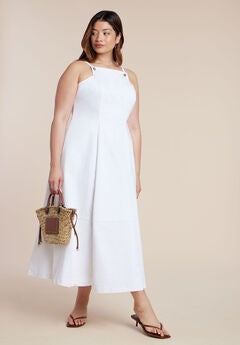 An A-line midi dress in mid-stretch blue denim featuring a fitted bodice, flared skirt, and adjustable straps.
-
 A blue midi dress with a sweetheart neckline, back shirring, and functional front pockets.
-
 A classic black crochet dress featuring self-tie shoulder straps and a flattering fitted silhouette.
-
 A pink maxi dress featuring adjustable straps, lace-embroidered bodice, side pockets, and a fully lined design.
-
 A white maxi dress with adjustable spaghetti straps, contrast embroidery, and a flowy, lightweight fabric.
-
 A light wash blue maxi dress in stretch lyocell denim with a frilled neckline and waist tie.
Plus Size Casual Spaghetti Strap Dresses
Frequently Asked Questions
Start with a denim jacket and a crossbody bag for an easy, everyday outfit. Your stylist can help you choose colors and details that connect with pieces you already love.
Wear your dress over a simple tee when you want a little more coverage. Your stylist can also suggest an open button-down or lightweight cardigan that complements your dress without hiding its details.
Choose sneakers for a day of errands, or try flat sandals for a relaxed weekend outfit. Your stylist can help you pair your dress length with shoes that suit your plans and personal style.
Swap your daytime bag for a small shoulder bag, then add statement earrings and dressier sandals. Your stylist can help you make that transition while keeping your outfit relaxed rather than formal.
Let your neckline guide your jewelry: try a pendant necklace, or skip it and highlight your earrings. Your stylist can help you balance accessories with your dress's print, color, and details.