Plus Size Elastic Waist Blouses

Find plus size elastic waist blouses that offer waist definition with a little give. Your stylist can help you consider where the elastic sits and how much room you prefer through the torso. A 1X can fit differently from brand to brand, so your stylist looks beyond the tag. Try your picks at home, with free exchanges if you need a different fit.

SORT BY

Sort By

Sort By

FILTER BY

Plus Size Elastic Waist Blouses

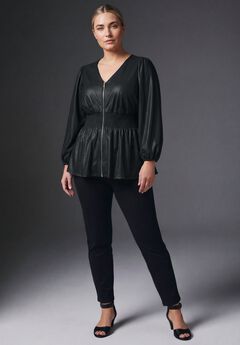
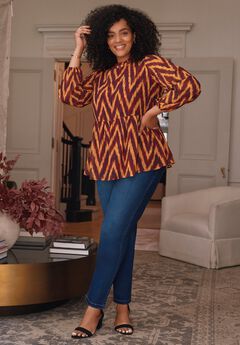
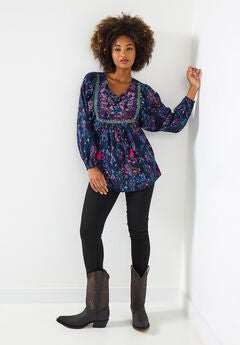
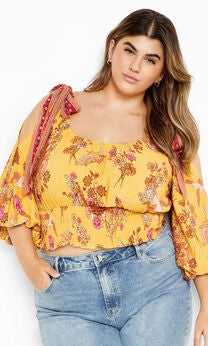
Plus size elastic waist blouses use a flexible gathered section to define the waist while allowing room through the body. That elastic may sit at your natural waist, slightly above it, or near the hem. Its placement changes both the silhouette and how the blouse feels when you move. A gathered hem creates a softly rounded blouson shape, with fabric draping loosely above the band. A waist seam with fabric extending below it creates a peplum effect without requiring a separate belt. Smocked styles use multiple rows of elasticized stitching, creating a wider textured section rather than one narrow band. Your stylist considers these differences alongside your preferred coverage, proportions, and everyday plans. When exploring Plus Size Blouses, notice how the waist treatment works with the fabric above and below it. A softly draping material usually falls differently from a crisp weave, even with similar construction. Cotton and cotton-blend fabrics can offer a more structured shape, depending on their weight and weave. Rayon and viscose often create fluid folds, while polyester blends can provide an easy drape with different care requirements. Jersey adds stretch throughout the blouse, not just at the waist, for a more flexible feel. Chiffon brings an airy, sheer texture that may call for a lining or a separate camisole. A lining can also affect how much stretch a blouse has, so both layers deserve attention. Prints, solid colors, and textured finishes each give those gathered details a different visual presence. Small prints can blend into the folds, while larger motifs may look different across a smocked section. For your workday, a restrained print and simple neckline can feel polished without elaborate styling. For dinner or a celebration, a softly gathered sleeve or subtle sheen can bring more detail. The appeal is a blouse with its own shape, allowing you to skip a full tuck. That can be especially useful when you want a defined waist without extra fabric inside your waistband.

Your best fit starts with where the elastic rests, not simply the size printed on the tag. One brand’s 1X might fit like another brand’s 3X; your stylist already knows those differences matter. Your measurements, preferred fit, and comfort with a close-fitting waistband give your stylist more useful direction. Elastic should stretch comfortably and recover its shape without feeling tight when you sit down. A wide smocked section distributes contact over more space, while a narrow band creates a distinct gathering point. Neither construction automatically feels better; the fabric, tension, and placement determine your experience. If you prefer less contact around your middle, a looser blouson shape may suit your style profile. If you like a more defined waist, a broader smocked panel may provide that shape. Check the shoulders and bust as carefully as the waist, especially with a woven blouse. Elastic at the waist does not necessarily add stretch through the chest, upper arms, or back. Button-front styles should rest smoothly across your bust without pulling open between the buttons. Sleeve openings and cuffs should leave enough room for comfortable movement, particularly when you reach forward. A blouse that feels comfortable standing still may behave differently during a seated meeting or drive. Raise your arms, reach across your body, and sit in a chair during your try-at-home time. Notice whether the waist returns to its intended position or needs frequent adjusting afterward. The hem should provide the coverage you want without catching awkwardly on your pants or skirt. Your stylist can use those observations to refine both your size and your preferred silhouette. Share specifics, such as sleeves that pull across your upper arms or elastic that sits too high. That feedback is more helpful than deciding that an entire style simply does not work. Free exchanges remove pressure from the first try, giving you room to resolve a fit issue. Your blouse should suit the way you actually spend your day, not just a moment in the mirror.

An elastic waist also gives your outfits a natural focal point, which can simplify getting dressed. With straight-leg pants, a softly gathered blouse offers contrast without needing a belt or careful tuck. With wide-leg trousers, pay attention to where the blouse ends so the waist remains clearly defined. A shorter peplum may sit neatly above the fullest part of a skirt, while longer versions offer more coverage. Your stylist can help balance those lengths with pieces you already enjoy wearing. For a desk-to-dinner outfit, a simple necklace and comfortable shoes let the blouse provide most of the detail. If you spend hours at a keyboard, sleeve volume and cuff placement matter as much as appearance. A dramatic sleeve may need more adjusting than a fitted cuff during an ordinary workday. Neckline preferences matter, too, particularly if you like wearing a pendant or prefer coverage when leaning forward. These small details help distinguish a blouse you admire from one you reach for repeatedly. Construction and care also influence how well that familiar fit holds up over time. Look for even gathering, secure seams, and elastic that returns smoothly after a gentle stretch. Smocking should lie consistently, without loose threads or sections that appear noticeably more stretched than others. Fabric at the waist experiences repeated movement, so sound stitching matters wherever the elastic is attached. Follow your blouse’s care label, since the outer fabric, lining, and elastic may have different needs. When machine washing is permitted, a mesh laundry bag can help protect delicate details from snagging. Avoid unnecessarily high heat, which can damage elastic fibers and change the fit of some fabrics. Follow drying instructions rather than assuming every easy-care fabric belongs in the dryer. If ironing is permitted, use the recommended setting and avoid pressing directly over elasticized stitching. Thoughtful care helps preserve the drape and recovery that make these blouses comfortable to wear. With your stylist handling the fit details, your elastic waist blouse can become an easy, dependable part of your wardrobe.

Frequently Asked Questions