Plus Size Evening Gowns With Train
Explore plus size evening gowns with a train for black-tie events and formal celebrations. Consider how the trailing hem will move through your venue, especially when walking or dancing. Your stylist knows sizing varies between brands and can help you find your fit. Try your choices at home, with free exchanges if the fit isn’t right.
-
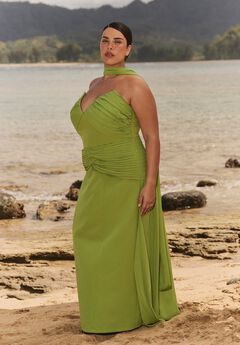 A strapless maxi gown in mid-stretch crepe featuring a pleated bodice and dramatic back train.
-
 A curve-hugging polyester gown in purple with a high slit and elegant one-shoulder design.
-
 A curve-hugging one-shoulder dress in shimmering net fabric with a sexy high slit and train.
-
 A bold stretch lycra gown with a plunging neckline, ruched waist, and eye-catching hot fix stones.
-
 A chic satin A-line dress with spaghetti straps, perfect for formal events or casual weddings.
-
 A dazzling stretch velvet mermaid gown with a deep V-neckline and sequin long sleeves.
-
 A glamorous onyx velvet gown adorned with sequins, featuring a dramatic mermaid skirt and corset back.
-
 An elegant sequin gown with a scoop neckline, available in six colors, featuring a side slit.
-
 A dazzling sequin gown with ostrich feather slit, available in Cobalt, Firecracker, and Jet.
-
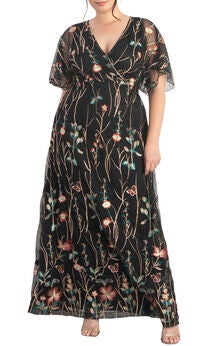
 A contemporary floral maxi dress in soft mesh tulle with playful pockets and an elegant train.
-
 A pink strapless stretch velvet gown with exposed corset boning and a dramatic high slit.
-
 A stunning velvet gown with silver beaded trim, perfect for curvy figures in bold colors.
-
 A dazzling sequin mermaid gown with a detachable chiffon cape, available in Fuchsia Sky and Kaleidoscope.
-
 A glamorous stretch lace mermaid gown in vibrant colors, featuring a V-neckline and sparkling stones.
-
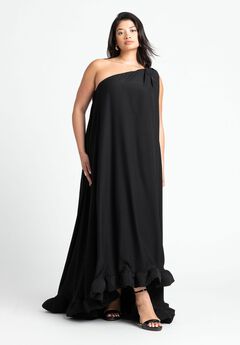
 A floor-length black gown with an asymmetrical neckline and dramatic ruffle high-low hem.What customers like:Comfortable and breathable Flattering fit Dramatic ruffle detail Gorgeous color Received many compliments
-
 A floor-length blue satin dress featuring puff sleeves, a surplice neckline, and a draped front slit.What customers like:Flattering fit High quality material Beautiful color Elegant design Perfect for special occasions
-
 A shimmering silver strapless dress with a sequin bodice and a voluminous crinoline skirt.What customers like:Eye-catching and glamorous appearance True to size and retains shape Flattering and comfortable fit Receives many compliments Perfect for special occasions
-
 A black pleated ombre maxi dress with a halter neckline and a flattering fit & flare silhouette.What customers like:Comfortable and soft material Flattering fit and silhouette Elegant and stylish appearance Receives many compliments Beautiful ombre color
-
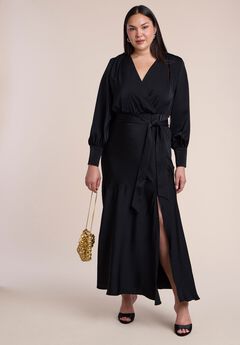
 A black satin maxi dress featuring a draped neckline and a close-fit bodice with a loose skirt.
-
 An emerald off-shoulder maxi dress with satin lining and a flattering tulip drape skirt.
-
 A floor-length black and white stretch crepe gown with a square neck, back zipper, and full lining.
-
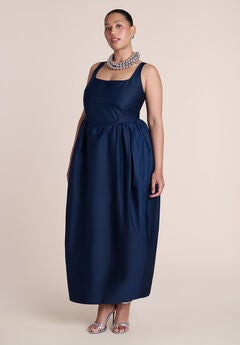 A navy maxi gown with a structured bodice, pleated taffeta skirt, and elegant tank neckline.
-
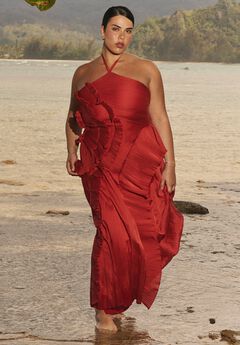 A pleated maxi gown featuring an intricately folded bodice, asymmetrical ruffles, and a sculpted halter neckline.
-
 An elegant navy lace gown with a ruched waistband and scalloped neckline for formal occasions.
Plus Size Evening Gowns With Train
Frequently Asked Questions
Black-tie weddings, formal galas, and elegant evening celebrations are natural occasions for a gown with a train. Share your invitation’s dress code with your stylist so she can help you choose the right level of drama.
A sweep train brushes the floor behind you, creating a subtle finish for your evening look. More extended trains make a dramatic entrance, while detachable designs let you change your look during the celebration. Your stylist can help you weigh the options against your plans.
Let your gown’s train provide the drama, then choose accessories that complement its neckline and details. Try statement earrings with a simple neckline, or understated jewelry when your gown already has embellishment. Your stylist can help you bring those details together without making your outfit feel overdone.
Follow the couple’s dress code, and reserve a dramatic train for an explicitly formal celebration. Choose a color and design that feel distinct from bridal attire, and consider a subtle sweep train. If the invitation leaves you unsure, check with your hosts before deciding.
Check whether your gown has a bustle or detachable train before planning your evening. A bustle gathers the train, while a detachable design lets you remove it for dancing. If neither is included, ask a tailor whether your gown can accommodate a bustle.