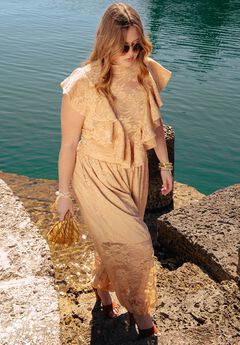
Plus Size Lace Pants

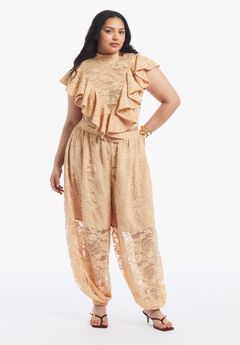
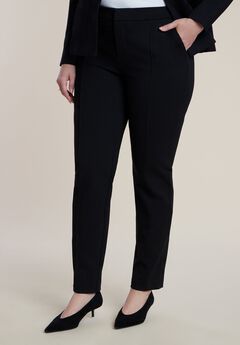
Choose your plus size lace pants by the details that matter: coverage, movement, and your preferred fit. Explore wide-leg lace with shorts lining, floral balloon shapes with sheer lower legs, and ponte pants with lace accents. Your stylist can help you decide how much texture you want—and which silhouette works with the pieces you already love.

SORT BY

Sort By

Sort By

FILTER BY

Plus Size Lace Pants

Plus size lace pants bring the texture of lace to trousers, from subtle hem details to allover openwork. Their character depends on the lace pattern, the leg shape, and what sits underneath the fabric. A wide-leg silhouette gives floral lace room to move, while a straight leg keeps the outline cleaner. A flared leg creates a more defined sweep below the knee, especially with a longer hem. Lace-trim pants offer a quieter version of the look, with detail at the ankle or side seam. Your stylist can help you choose how much texture fits your everyday wardrobe and your plans. Fully lined lace pants generally provide more coverage, though the lining’s length and opacity still matter. Partial linings leave sections of lace visible against your skin, creating a distinctly sheer effect. Unlined lace needs particular attention to underlayers, especially when you want coverage through the seat and thighs. A separate fitted short or lightweight lining can change both the appearance and feel of the pants. Look at the fabric description rather than assuming every lace style has the same construction. Lace may contain nylon, polyester, cotton, rayon, or blends, with elastane or spandex adding stretch. Cotton-rich lace can have a more matte, substantial texture, while some synthetic blends feel lighter or smoother. Those qualities vary with the knit, pattern, and finishing, not just the fiber name. Stretch lace allows more movement, but the lining and waistband must move comfortably with it. Nonstretch lace relies more heavily on the cut, particularly around your hips, thighs, and knees. Your stylist considers those layers together, rather than treating the decorative outer fabric as the whole story. Dense floral motifs create a different impression from fine mesh with smaller, scattered details. A contrasting lining emphasizes the pattern, while a closely matched lining lets the texture feel more understated. The best starting point is the amount of coverage, movement, and detail you actually enjoy wearing.

Size labels alone cannot tell you how plus size lace pants will fit across different designs. A 1X in one brand may fit like a 3X in another. Your stylist already knows that inconsistency and considers your measurements, preferences, and feedback beyond the tag. Your style profile helps explain whether you prefer a close fit or extra room through your thighs. The rise matters, too, because it determines where the waistband rests when you sit and move. A higher rise can pair neatly with a tucked blouse, provided the waistband feels comfortable seated. A mid-rise creates a different proportion and may suit the way you prefer your tops to fall. Elastic waistbands offer flexibility, while a structured waistband or zipper closure creates a more tailored finish. Neither construction tells the whole fit story without considering the fabric and the cut. With lined lace, check that the inner layer has enough room through your seat and thighs. A generous outer leg can still feel restrictive if the lining pulls underneath it. Sit down, take a few steps, and bend your knees when trying your pants at home. That simple movement check can reveal tension that standing in front of a mirror misses. Notice whether the lace catches at your knees or the waistband rolls when you sit. Your stylist can use those details to refine the fit instead of simply changing the labeled size. Inseam is equally personal, especially when a lace border finishes the hem with a scalloped edge. Altering that edge can require more care than shortening a plain trouser hem. Try your pants with the shoes you expect to wear, checking that the lace clears the floor. Extra length can catch beneath a heel or rub against the ground, damaging delicate threads. Your try-at-home time gives you space to check these details without a dressing-room rush. Free exchanges remove the pressure when the first fit needs another look. Share what felt right and what pulled, shifted, or needed more room with your stylist.

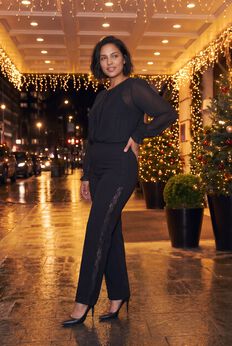
Your outfit can let lace take the lead without making everything else feel overly dressed. Black lace pants with an opaque lining and a simple knit top can suit dinner or a performance. Add a smooth blazer when you want a sharper outline, keeping jewelry simple enough to avoid catching. For a celebration, a fluid blouse brings movement without competing with a detailed lace pattern. Your stylist can coordinate Plus Size Lace Tops with your pants when you prefer a more connected look. Similar lace scales and closely related colors can make separate pieces feel intentional together. A smooth camisole beneath a lace top also helps keep layered textures from feeling too busy. For less formal plans, a cotton tee and clean, simple shoes give lace trousers a relaxed contrast. Coverage should match the setting, particularly with sheer panels or a short lining beneath longer lace. Check the effect in daylight as well as indoor lighting before deciding on your underlayers. A smooth underlayer can reduce visible seams without adding unnecessary bulk beneath the lace. Your stylist can help balance that coverage with the comfort you want for several hours of wear. Care deserves the same attention as fit because lace contains open areas that can catch easily. Follow the garment’s care label, including any separate instructions for its lining or decorative trim. If machine washing is permitted, a mesh laundry bag can help limit contact with other garments. Close nearby hooks and zippers, and keep lace away from rough fabrics that might snag it. Hand-wash-only pieces need gentle handling rather than twisting or wringing, which can distort the pattern. Use the drying method on the label, since hanging wet fabric may stretch some constructions. Avoid direct heat unless the care instructions specifically allow it, especially with synthetic fibers or elastic. Store your pants without sharp clips pressing into delicate sections, and watch for jewelry catching during dressing. Thoughtful handling helps preserve the lace pattern and keeps your pants ready for another wearing.

FAQ