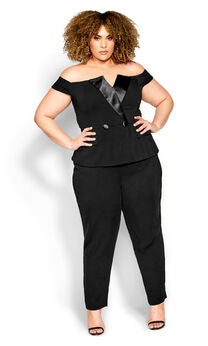
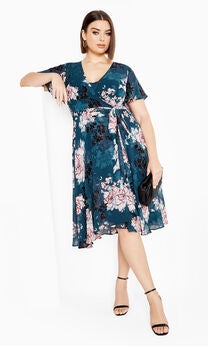
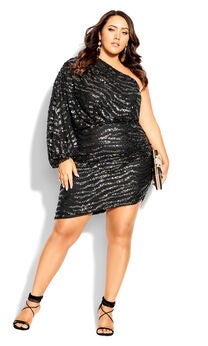
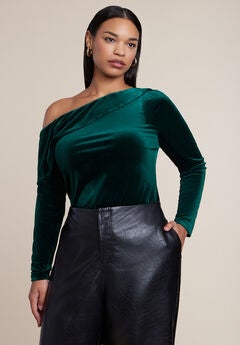
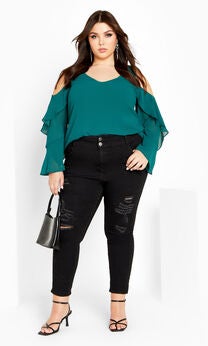
Plus Size Open Shoulder Dresses
Explore plus size open shoulder dresses for a look that shows a little shoulder without going strapless. Your stylist can help you navigate sizing—one brand’s 1X may be another’s 3X—rather than relying on the tag alone. Try your picks at home, with free exchanges if you need a different fit.
-
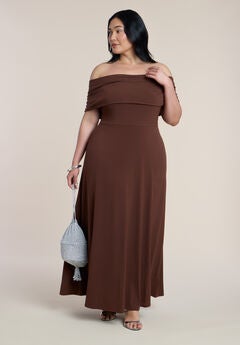 An off-the-shoulder maxi dress with a close-fit bodice and loose skirt in high-stretch knit.What customers like:Comfortable and stretchy Figure-flattering fit True to size Beautiful color Elegant and stylish
-
 A black midi-length dress with a one-shoulder design, cutout detail, and back slit for ease.
-
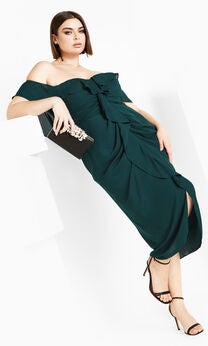 An emerald off-shoulder dress with ruched details, soft boning, and bust support padding.
-
 A white one-shoulder midi bodycon dress with an elegant cape, made from polyester and spandex.
-
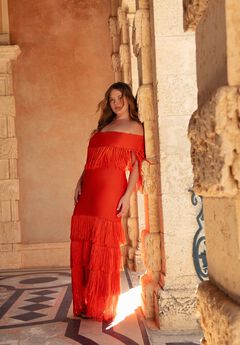 An off-the-shoulder knit maxi dress featuring tiered fringe and a relaxed, feminine silhouette in 100% acrylic.
-
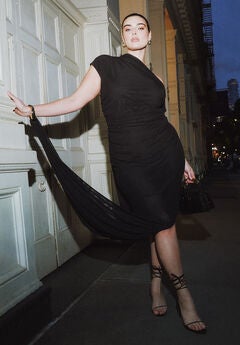 An elegant black maxi dress featuring an asymmetrical off-the-shoulder neckline and removable bracelet detail.
-
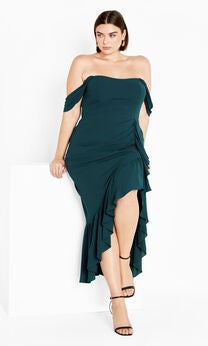 An emerald off-shoulder maxi dress with ruffle details and elasticated sides for chic allure.
-
 An orange off-shoulder dress with a faux wrap skirt, tulip hemline, and soft woven fabric.
-
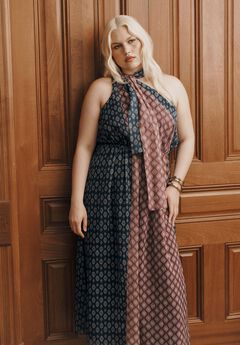 A royal blue, one-shoulder maxi dress in striped lurex chiffon with pleating and an elegant neck tie.
-
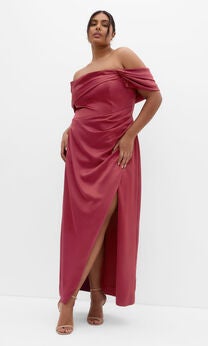 A flowing bordeaux maxi dress with an off-shoulder neckline and soft satin-feel fabric.
-
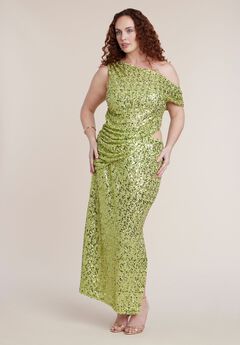 An off-the-shoulder sequin maxi dress featuring a draped neckline, waist cutout, and shimmering stretch polyester.
-
 An off-shoulder crepe dress in polyester-elastane blend, offering comfort and style for any occasion.
-
 An elegant garnet maxi dress with off-shoulder neckline and ruffle detail for special occasions.
-
 A textured off-the-shoulder maxi sweater dress in stretch knit, crafted from soft polyester-cotton blend.
-
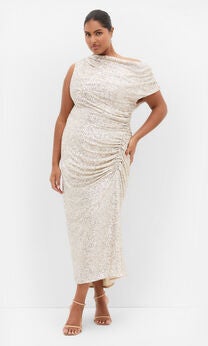 A beige, fully lined maxi dress featuring an off-shoulder neckline and shimmering stretch all-over sequin fabrication.
-
 An off-the-shoulder dusty mauve dress with athletic stripes, crafted from soft baby french terry.
-
 A pale banana off-the-shoulder midi dress with an elasticated waist, made from 100% polyester.
-
 An off-the-shoulder satin dress in onyx with a retro A-line tea-length skirt.
-
 An off-the-shoulder silk mini dress with a ruffle hem and A-line silhouette.
-
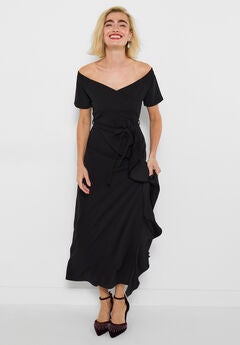 A black jersey maxi dress with an off-shoulder neckline, draped ruffle, side slit, and removable belt.
-
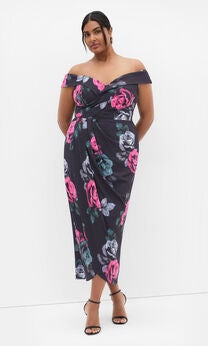 A black off-shoulder dress featuring a faux wrap skirt, tulip hemline, and soft woven fabric.
-
 An elegant green midi dress with off-shoulder neckline, puff sleeves, and flattering front ruching.
-
 A striking red one-shoulder dress with an asymmetrical hemline in stretch knit matte jersey.What customers like:Vibrant color Flattering fit Versatile design Comfortable material Received compliments
-
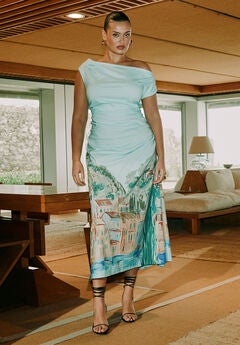 An elegant one-shoulder maxi dress with a draped neckline and side zipper in stretch poplin.
Plus Size Open Shoulder Dresses
Frequently Asked Questions
An open shoulder dress reveals part of your shoulders through cutouts or an open neckline. Your stylist can help you explore cold shoulder details or off-the-shoulder silhouettes based on your personal style.
Pair your dress with white sneakers or flat sandals for an easy daytime outfit. Your stylist can help you keep the look relaxed with a crossbody bag and simple jewelry.
An open shoulder dress can work for a wedding when its design matches the dress code. Share the venue and invitation details with your stylist so she can guide your outfit and accessories.
Let your neckline guide your jewelry: statement earrings leave your shoulders and neckline in focus. If you prefer a necklace, your stylist can suggest a length that complements your dress without competing with its details.
Try a denim jacket for casual plans, or choose a wrap for a dressier occasion. Your stylist can help you find a layer that accommodates your dress’s sleeves without bunching at your shoulders.