Plus Size Puffer Jackets For Women
Find plus size puffer jackets for women with your cold-weather routine, preferred coverage, and everyday layers in mind. One brand’s 1X can fit differently from another’s, so your stylist helps you look beyond the size tag. Try your picks at home, with free exchanges if your fit needs adjusting.
-
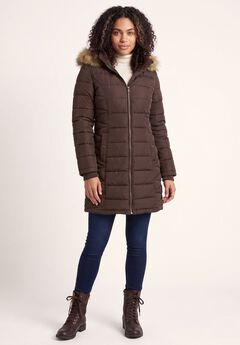 A polished polyester puffer with removable faux-fur trim, shaping seams, cozy pockets, and a two-way zipper.What customers like:Long, flattering length with good coverage Comfortable fit with room for layering Soft, cozy lining, pockets, cuffs, and collar Stylish faux-fur trim and functional closures Excellent warmth and protection from bitter cold
-
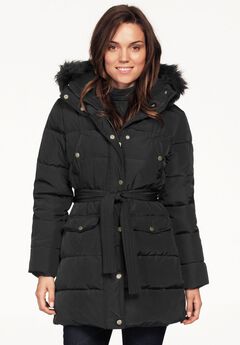 A black water-resistant puffer coat with a self sash belt, removable faux fur hood, and fleece-lined pockets.What customers like:Roomy for easy layering Flattering fit with adjustable belt Very warm and comfortable Functional and cozy pockets Stylish design with removable faux fur hood
-
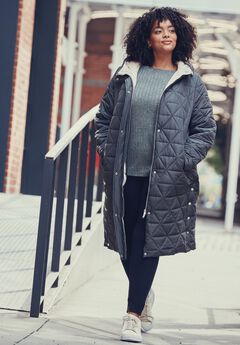 A stylish longline puffer jacket with a quilted interior and drawstring waist for a flattering fit.
-
 A fully lined hooded puffer jacket with bold chevron panelling and functional zipper pockets.
-
 A short quilted puffer jacket made from recycled polyester, perfect for cold weather.
-
 An indigo Tencel puffer jacket with quilted design, high collar, and bungee cord sides.
-
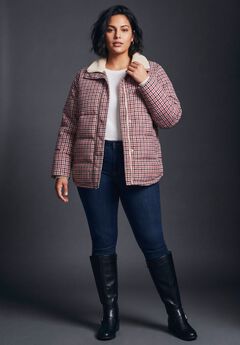 A water-resistant polyester puffer jacket with quilted insulation, plush sherpa lining, detachable hood, and ribbed cuffs.
-
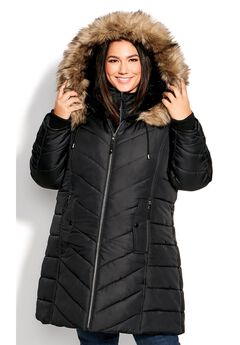 A black long puffer coat with a faux fur-trimmed hood, shirred cuffs, double-zip closure, and pockets.
-
 A black polyester maxi puffer with zippered side slits, fleece-lined pockets, and a cozy hood.What customers like:Comfortable fit with room for layering Practical side zippers for mobility Very warm and cozy Deep fleece-lined pockets and large hood Stylish and well made
-
 A black puffer coat with a removable faux fur hood and flattering belted waistline.What customers like:Flattering belted waist and hourglass fit Removable faux fur hood for versatility Warm and cozy with soft lining Chic, stylish, and well-made design Accurate sizing and great fit
-
 A black quilted polyester puffer jacket with a faux-fur hood, button closure, and practical pockets.
-
 A water-resistant black polyester puffer coat with a belted waist, oversized hood, and fleece-lined pockets.
-
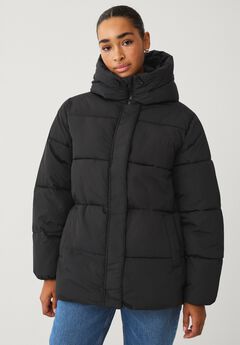 A water-resistant black polyester puffer with an oversized hood, adjustable drawstrings, and fleece-lined pockets for warmth.
-
 A vibrant yellow quilted jacket with a coffee cup print, featuring down-alternative fill for warmth.
-
 A royal blue quilted puffer jacket with a hood, full zip, and cozy padded nylon shell.
-
 A black quilted coat with a hooded neckline and zip closure, perfect for cozy weekends.
-
 A latte-hued jacket with a detachable faux fur collar and functional zip pockets.
-
 A water-repellant, windproof parka with faux fur lining, perfect for extreme cold weather conditions.
-
 A black mid-length hooded parka coat with vegan down, perfect for cold weather.
Plus Size Puffer Jackets For Women
Frequently Asked Questions
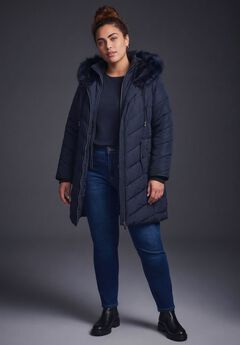
Pair your puffer jacket with straight-leg jeans, a simple knit, and sneakers for an easy everyday outfit. Your stylist can help you coordinate plus size puffer jackets with pieces you already enjoy wearing.
Try your long puffer jacket over a sweater and tailored pants, then finish with ankle boots. Keep your jacket open when styling your outfit to let the layers underneath become part of your look.
Wear your puffer jacket over a knit dress, then add boots for a relaxed alternative to a dress coat. Your stylist can help you coordinate jacket and dress lengths so the outfit feels intentional.
Start with the colors you wear most, then decide whether your jacket should blend in or stand out. Your stylist can use your style profile to suggest neutrals or bolder shades that complement your favorite outfits.
Choose a ribbed beanie, a simple scarf, or a crossbody bag to give your puffer outfit a personal finish. Repeat a color from your jacket or clothing to bring the accessories into the look.