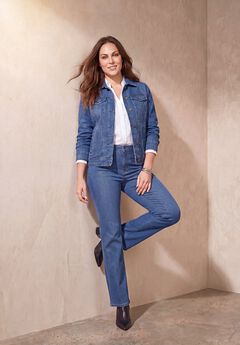
Plus Size Stretchy Pencil Skirt
Explore plus size stretchy pencil skirts for a streamlined shape with room to move, whether you’re dressing for work or dinner. Your stylist can help you navigate sizing differences—a 1X in one brand may fit differently in another. Try your picks at home, with free exchanges if you need a different size.
-
 A sleek black neoprene pencil skirt with a high rise, back slit, and comfortable pull-on style.What customers like:High quality and well made Versatile for many occasions Polished, professional appearance Comfortable stretchy material Flattering, curve-hugging fit
-
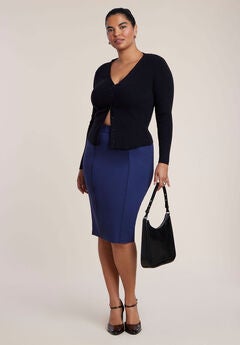 A blue stretch pencil skirt in medium-weight ponte fabric with an encased elastic waistband.What customers like:Perfect length High quality fabric Flattering fit Comfortable wear Versatile style
-
 A black bodycon pencil skirt in comfort stretch knit, perfect for pairing with any blouse.What customers like:Quality fabric Flattering fit Versatile style Comfortable material True to size
-
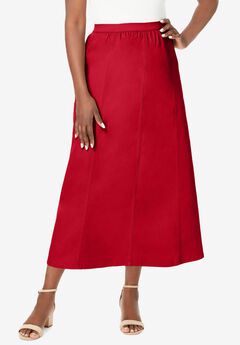 A red stretch denim skirt with vertical seaming and an all-around elastic waistband for comfort.What customers like:Durable, quality stretch denim fabric Versatile for different occasions and seasons Flattering and modest style Comfortable fit and waistband Easy care and washes well
-
 A navy pencil skirt crafted from comfortable bi-stretch poly/spandex with a contoured waistband and back vent.What customers like:Versatile style for various occasions High-quality, stretchy fabric Easy to care for and durable Flattering and comfortable fit Attractive design and appearance
-
 A high-rise, knee-length pencil skirt crafted from stretchy polyester-spandex for polished, curve-sculpting versatility.
-
 A high-waisted black pencil skirt in stretch cotton with paneled hips and a pleated back vent.
-
 A high-waisted pencil skirt in blue and white gingham with nautical faux button accents.
-
 A soft indigo cotton-blend pencil skirt with a subtle side slit for added allure.
-
 A stretchy brown faux suede bodycon mini skirt with a high waist and pull-on styling.
-
 A stylish colorblock column skirt with a hidden elastic waistband, crafted from stretch knit ponte.What customers like:High-quality material Flattering fit Versatile style Beautiful color Stretchy fabric
-
 A black athleisure pencil skirt made from soft, sustainable lyocell and spandex fabric.
-
 A sleek, high-rise pencil skirt with flattering princess seams, available in plus sizes 0X-5X.
-
 A chic black pencil skirt, fully lined with an invisible back zipper, perfect for professional settings.
-
 A black stretch denim midi skirt with a contoured waistband and classic five-pocket A-line silhouette.What customers like:Flattering fit Stylish appearance Comfortable to wear
-
 A black wool-blend pencil skirt featuring a faux wrap silhouette and decorative side buttons.What customers like:High quality wool and material Warm and suitable for colder seasons Flattering and comfortable fit Stylish design with attractive colors Well made and durable
-
 A black stretch denim skirt with a contoured waistband, A-line silhouette, and classic 5-pocket styling.What customers like:Flattering and stylish design Versatile for different occasions and seasons Durable and high-quality denim Comfortable fit Perfect and consistent length
-
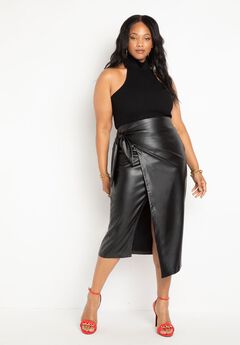 A sleek black faux leather midi skirt with a draped front and tall slit at the hem.What customers like:Versatile and classy design Flattering and sexy fit Soft and stretchy material True to size and comfortable Compliments on appearance
-
 A polished olive cotton-spandex twill skirt with stretch, belt loops, zip-button closure, and convenient pockets.What customers like:Stretchy, quality material Convenient pockets Versatile everyday style Flattering knee-length design Comfortable fit
-
 A stylish pleated skirt featuring a stretch faux leather upper and non-stretch woven bottom.
-
 A close-fit white and black sweater skirt with side slit, crafted from soft, stretchy intarsia knit.
-
 A brown, close-fit midi skirt crafted from stretchy viscose-blend sweater knit with floral intarsia detailing.
-
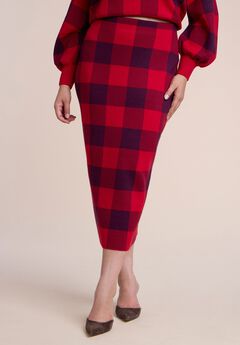 A red plaid intarsia knit midi skirt with a stretchy bodycon fit and comfortable elastic pull-on waist.
-
 A flattering denim midi skirt with a front slit, crafted from cotton/poly/spandex for comfort.
Plus Size Stretchy Pencil Skirt
Frequently Asked Questions
Pair your skirt with a tucked-in blouse and a blazer for a polished office outfit. Your stylist can help you choose proportions that feel right for your workplace, whether you prefer a structured jacket or a softer cardigan.
Try a fitted knit for a streamlined look, or add contrast with a relaxed button-down shirt. Tuck your top fully or just at the front to change the proportions. Your stylist can help you build combinations around your preferred coverage.
Wear your skirt with a favorite T-shirt and sneakers for an easy weekend outfit. Add a denim jacket when you want another layer. Your stylist can suggest ways to work your skirt into the casual outfits you already enjoy.
Choose loafers for a polished everyday look, sneakers for casual plans, or heels for dressier occasions. Your skirt’s hemline helps guide the pairing: ankle boots create a different finish than shoes that leave your ankle visible.
Pair your skirt with a draped top, statement earrings, and a compact bag for an evening look. Keep the details focused on one or two accents. Your stylist can help you make the outfit feel dressy without feeling unlike yourself.