Plus Size Trendy Tunics
Find plus size trendy tunics for a fresh take on the longer-length tops you love. Keep your favorite jeans or leggings in mind as you explore, and let your stylist help with fit. A 1X in one brand can fit differently in another, so the tag is only a starting point. Try your picks at home, with free exchanges if the fit isn’t right.
-
 A lightweight rayon-spandex swing tunic with three-quarter sleeves and a relaxed, breathable drape.What customers like:Flattering swing fit for various body shapes Wrinkle-resistant and easy to care for Versatile styling and layering options Attractive prints and color variety Comfortable and soft fabric
-
 A lightweight cotton cambric tunic with a Henley neckline, 3/4 roll-tab sleeves, and relaxed fit.What customers like:Comfortable relaxed fit Flattering and stylish design Lightweight and breathable fabric Versatile and easy to style Easy care and washes well
-
 A flattering black or brown tunic featuring a twisted knot-front in soft rayon-spandex jersey knit.What customers like:Flattering fit and design Provides good belly coverage Soft, lightweight, and cool fabric Comfortable and forgiving Versatile color and pattern options
-
 A lightweight red tunic in soft French terry with ribbed details and slanted zip pockets.What customers like:Versatile style Soft and quality material Warm and cozy Flattering longer length Comfortable fit
-
 A black jersey tank featuring a scoop neckline and delicate lace trim at the hem.What customers like:Beautiful lace trim and feminine details Versatile for layering and styling Soft, comfortable, and non-irritating fabric Flattering fit with great coverage and length Durable quality that washes well
-
 A feminine white and black floral tunic in 100% cotton cambric with pintucking and tiered flounce hem.What customers like:Comfortable and breathable cotton fabric Flattering and feminine design Lightweight and perfect for warm weather Easy care and minimal wrinkling Great fit and modest coverage
-
 A black rayon-spandex sleeveless tunic featuring a scoopneck and flattering longer trapeze silhouette.What customers like:Versatile for layering and occasions Wrinkle-resistant and easy to care for High-quality, substantial fabric Flattering silhouette Comfortable fit
-
 A rayon woven tunic featuring a tie neck, faux button placket, and elastic-cuffed raglan sleeves.What customers like:Flattering and versatile style Easy care and minimal wrinkling Attractive color options Comfortable fit Lightweight and airy fabric
-
 A soft cotton-blend tunic featuring a relaxed A-line silhouette and short straight sleeves in a classic V-neck.What customers like:Washes well and retains shape Great length and coverage Soft and comfortable fabric Flattering and roomy fit Variety of vibrant colors
-
 A relaxed black tunic with a ribbed V-neck, blouson sleeves, and soft rayon-blend fabric.What customers like:Flattering and true to size fit Great tunic length for coverage Super soft and comfortable Versatile style and color options Washes well with no shrinkage or pilling
-
 A relaxed cotton-spandex tunic featuring a notch neck, 3/4 sleeves, and side slits for comfort.What customers like:Flattering notch neck Versatile and stylish design Soft and stretchy fabric Easy care and durable Comfortable fit
-
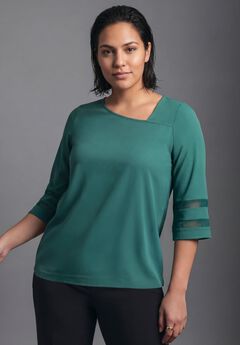
 A green stretch knit tunic featuring a scoop neck, 3/4 sleeves, and a curved hi-low hem.What customers like:Beautiful color and pattern Lightweight and soft fabric Flattering and flowy style True to size Comfortable fit
-
 A chic tunic with embellished V-neckline and asymmetrical bell sleeves, crafted from 100% polyester.What customers like:Lightweight and good quality fabric Chic and elegant appearance True to size Flattering and comfortable fit Beautiful color
-
 A vibrant green V-neck tunic featuring neon stripes, three-quarter bell sleeves, and a ruffle hem.What customers like:Attractive retro-inspired details Stylish and versatile design High quality and soft fabric Flattering and comfortable fit Beautiful and vibrant color
-
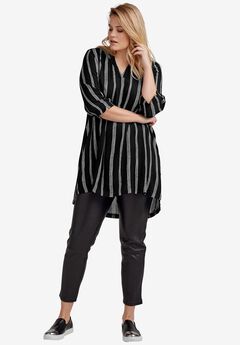 A black-and-white crinkle crepe tunic with a notch neckline, three-quarter sleeves, and a high-low hem.What customers like:Versatile, stylish, and artistic design Lightweight, breathable, and cool for warm weather Washes well and earns compliments Comfortable and soft fabric Flattering, loose fit with a graceful drape
-
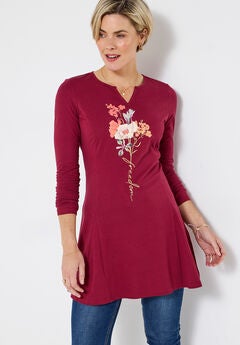 A soft rayon-spandex tunic with floral graphic, notch neck, inverted hip pleats, and self-covered buttons.
-
 A cozy olive green rib hacci tunic featuring a cowl neckline, button detail, and 3/4 sleeves.
-
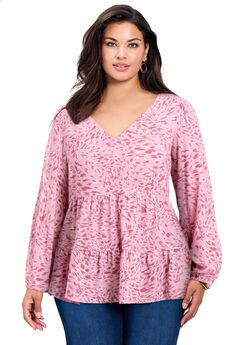 A pink viscose tunic with a V neckline and ruffle hi-lo hemline for effortless chic.
-
 An olive Hacci tunic with playful zip details, offering comfort and style in plus sizes.
-
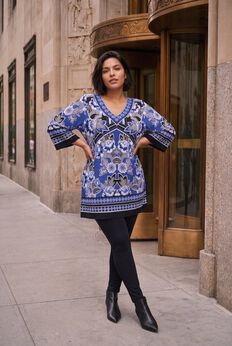 A vibrant tunic with floral and geometric prints, featuring a V-neckline and three-quarter sleeves.
-
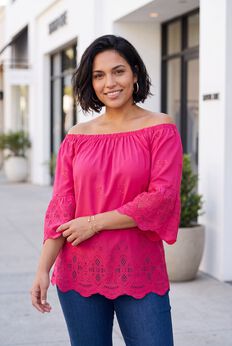 A pink woven tunic with eyelet detailing, scalloped hems, and a convertible elastic neckline for versatile styling.
-
 A chic tunic with a cosy cowl neckline, crafted from soft stretch jersey in plus sizes.
-
 A floaty tunic with a V-neckline and textured swiss dot cheesecloth in 100% viscose.
-
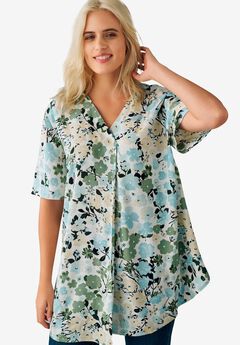 A flowy white rayon tunic featuring an inverted V-neck, pleated front, drop-shoulder sleeves, and curved hem.
Plus Size Trendy Tunics
Frequently Asked Questions
Look for details like an asymmetric hem, an expressive print, or an interesting neckline. Your stylist can help you choose which trends belong in your wardrobe, keeping your preferences front and center.
Pair your tunic with leggings or straight-leg jeans when you want an easy, everyday outfit. For a different direction, ask your stylist about wide-leg pants and a tunic with side slits.
Wear your tunic with tailored pants and loafers for a polished outfit that still feels relaxed. Your stylist can help you choose prints and finishing touches that suit your workplace.
Try an open jacket that leaves your tunic’s neckline and front details in view. Your stylist can help you coordinate hemlines so your layers feel intentional rather than competing.
Let your tunic guide your accessories: an expressive print often needs just a simple finishing touch. Ask your stylist about earrings for a detailed neckline or a pendant for a simpler one.