Plus Size Warm Winter Jackets
Find plus size warm winter jackets for your cold-weather wardrobe, with your layering needs in mind. Sizing varies between brands, so your stylist helps you choose winter outerwear based on your fit preferences. Try your picks at home with your usual layers, with free exchanges if you need a different fit.
-
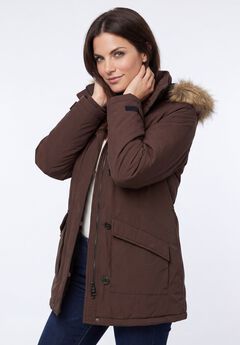 A water-resistant nylon parka with faux-fur trim, removable hood, two-way zip, and cozy storm cuffs.What customers like:Convenient two-way zipper Roomy, deep pockets and adjustable features Warm and cozy for cold weather Flattering, comfortable fit with suitable length Water-resistant and windproof protection
-
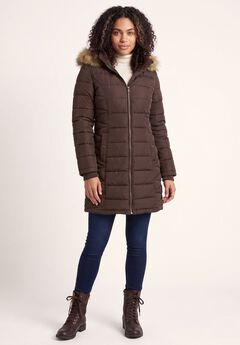 A polyester puffer coat with removable faux-fur trim, shaping seams, warm pockets, and a two-way zipper.What customers like:Functional features including secure pockets, cuffs, and two-way zipper Long length provides excellent coverage Soft fleece lining and realistic faux-fur trim Comfortable, roomy fit with space for layering Exceptional warmth and cold protection
-
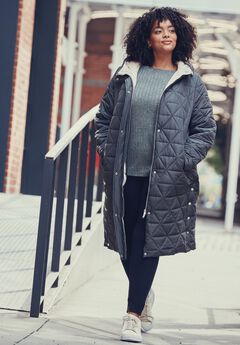 A quilted longline puffer jacket with a drawstring waist and fully lined for warmth and style.
-
 A stylish hooded puffer jacket with triple chevron panelling, fully lined for warmth and flair.
-
 A black anorak with faux fur lining, drawstring waist, and hood for stylish winter warmth.
-
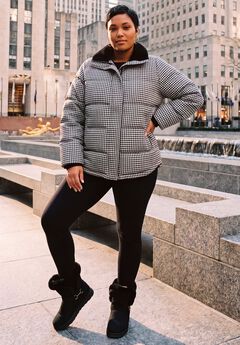 A black water-resistant quilted polyester puffer jacket with plush sherpa lining, detachable hood, and cozy warmth.
-
 A black quilted puffer jacket with vegan down, offering warmth and style for cold weather.
-
 A water-repellant, windproof parka with faux fur lining, perfect for extreme cold weather conditions.
-
 A black teddy fleece jacket with full-length sleeves and a cozy hood for stylish warmth.
-
 An indigo Tencel puffer jacket with quilted design, high collar, and bungee cord sides.
-
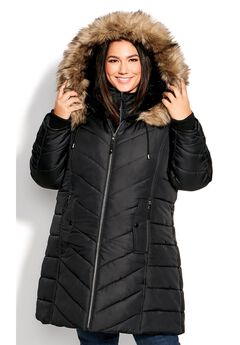 A navy puffer coat with faux fur hood, double zip closure, and practical front pockets.What customers like:Versatile and practical features Stylish design with quality details Warm and cozy Great value for the price Flattering and roomy fit
-
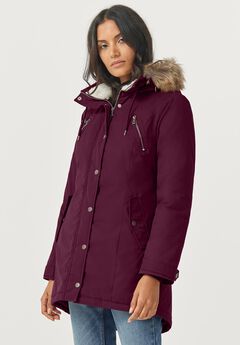 A water-resistant midnight parka with sherpa trim, fleece-lined pockets, hood, and warm polyfill insulation.What customers like:Deep, lined pockets and practical closures Very warm and cozy Comfortable, well-fitting, and roomy for layering Lightweight and non-bulky Stylish, flattering A-line design
-
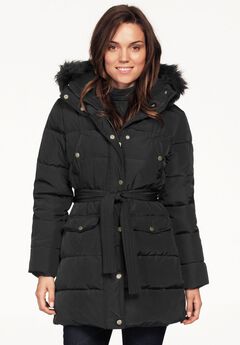 A black polyester taffeta puffer coat with a self sash belt, removable hood, and water-resistant finish.What customers like:Flattering belted design with adjustable fit Lightweight yet not bulky Roomy pockets and good coverage True to size with space for layering Very warm and comfortable
-
 A grey polyester maxi puffer with hood, funnel collar, fleece-lined pockets, and zippered side slits.What customers like:Exceptional warmth and coziness Stylish, weather-resistant construction Long coverage and practical design Convenient side zippers for easy movement Comfortable, roomy fit
-
 A black puffer coat with a removable faux fur hood and flattering belted waistline.What customers like:Flattering belted waist and hourglass fit Removable faux fur hood for versatility Warm and cozy with soft lining Chic, stylish, and well made Accurate sizing and great fit
-
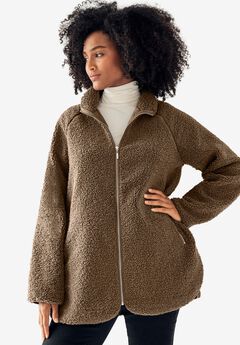 A cozy brown sherpa jacket with zip-front, stand collar, elastic cuffs, and fully lined for extra warmth.What customers like:Great for layering Attractive appearance Soft and comfortable Warm and cozy Fits well and true to size
-
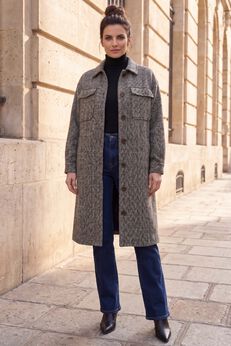 A wool-blend shirt jacket in white or black with button front, oversized pockets, and side-slit hem.What customers like:Versatile layering piece Quality, soft wool-blend fabric Warm and cozy Comfortable, roomy fit Stylish plaid design
-
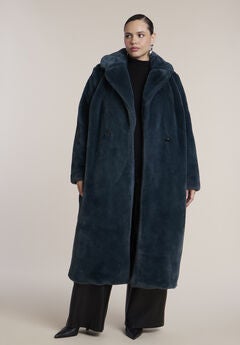 A plush polyester faux fur coat with notch lapels, double-breasted buttons, pockets, and a calf-grazing silhouette.
-
 A mid-thigh length faux wool coat with gold hardware, lined hood, and functional zip pockets.What customers like:Perfect and accurate fit Warm and cozy Comfortable material Functional hood and pockets Stylish appearance
-
 A fully lined, double-breasted long coat in textured wool-blend with strong shoulders and functional flap pockets.
-
 A cozy maxi coat in textured fleece with a feminine notch-neckline and fleece-lined pockets.
-
 A black longline sweater coat with a check design, crafted from a nylon-polyester blend.
-
 A black quilted puffer jacket with a faux-fur hood and functional front pockets for winter warmth.
-
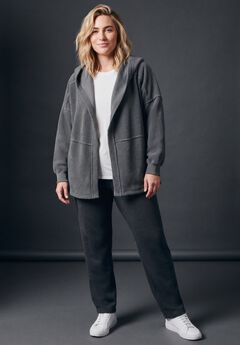 A cozy teddy fleece jacket with exposed seams and dropped shoulders for effortless style.
Plus Size Warm Winter Jackets
Frequently Asked Questions
Pair your winter jacket with straight-leg jeans, ankle boots, and a sweater for an easy everyday outfit. Your stylist can help you choose jacket details that work with the pieces you already reach for.
Take cues from your work outfits, repeating a color from your trousers, dresses, or shoes. Your stylist can help you coordinate jacket and hem lengths so your outerwear feels like part of your outfit.
Start with the colors you wear most, then decide whether you want contrast or coordination. Your stylist can help you choose between a versatile neutral and a brighter shade that becomes your outfit’s focal point.
Choose a scarf, hat, and gloves that share one color rather than matching every piece exactly. Your stylist can help you balance accessories with your jacket’s neckline, hood, and other details.
Pull one color from your patterned dress or separates and repeat it in your jacket or accessories. Your stylist can help you combine patterns and outerwear without making every element compete for attention.