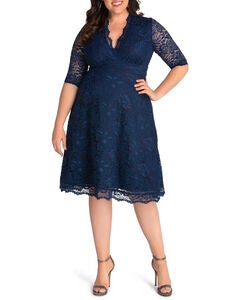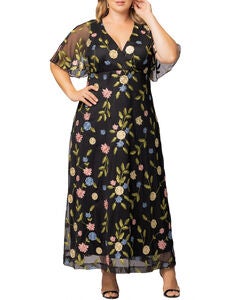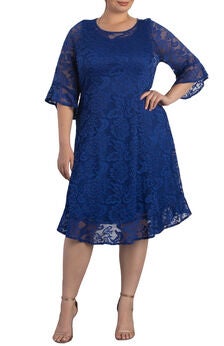
Plus Size White Bridal Gown
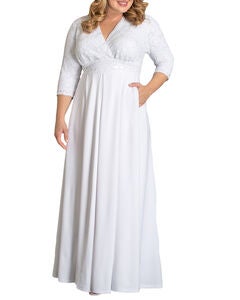
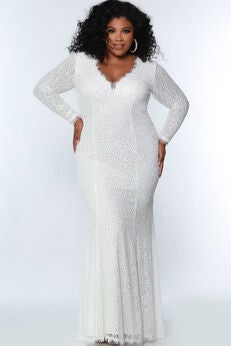
Finding the perfect dress for your special day is an unforgettable journey, and our collection of plus size white bridal gowns is here to make that experience magical. Designed to celebrate your curves and enhance your natural beauty, these gowns offer a diverse range of styles, from timeless classics to modern silhouettes. Whether you're envisioning a fairy-tale wedding or a chic, contemporary ceremony, our selection ensures that every bride can find her dream dress. Explore our plus size white bridal gowns and discover the elegance and sophistication that will make you shine on your wedding day.
Plus Size White Bridal Gown
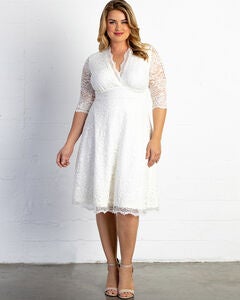
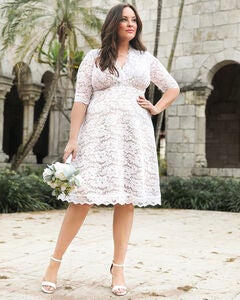
Choose a plus size white bridal gown around how you want to look, feel, and move through your wedding. White wedding gowns span crisp, architectural silhouettes, softly draped skirts, and lace designs with intricate texture. The distinction is not simply formal versus casual; fabric, construction, and proportion shape the entire effect. An A-line gown fits through the bodice before widening toward the hem, leaving room for movement. A ball gown creates a fuller skirt, often supported by layers that add volume and weight. Mermaid silhouettes stay fitted through the hips and thighs before flaring, while sheath gowns follow a straighter line. Your stylist can help connect those differences to your preferences, whether you picture a sweeping entrance or an easy walk into a courthouse. Think about your setting, too. A long train makes a beautiful impression down an open aisle, but it needs attention on stairs and grass. A shorter train or floor-length skirt can be easier to manage during a small ceremony followed by dinner. Satin brings a smooth surface and reflected light, although its weight and structure vary with the weave and fiber. Chiffon creates soft movement and often needs lining, while tulle builds airy-looking volume through multiple layers. Crepe offers a more understated surface, with stretch depending on the fabric’s composition rather than its name alone. Lace can appear delicate and floral or bold and geometric; its placement changes how a bodice, sleeve, or skirt reads. Your preferred shade of white deserves the same attention as your silhouette. Bright white can look crisp, while softer whites may appear less stark beside lace, pearls, or warm lighting. Compare shades in daylight and under indoor light when possible, since photographs can shift their appearance. If you prefer a warmer alternative, explore Plus Size Ivory Wedding Dress styles and consider how the shade works with your accessories. Your gown should reflect your style, whether that means a clean neckline, embroidered sleeves, or a skirt that swishes across the dance floor.
Start your fit conversation with your measurements and the details that usually need extra attention. Size is just a number: one brand’s 1X might be another brand’s 3X, and bridal sizing can differ from everyday clothing. Your stylist understands those inconsistencies and can help interpret measurements rather than relying on your usual tag size. For a plus size wedding gown, bust, waist, and hip measurements provide a starting point, but they do not describe everything. Torso length, shoulder width, upper-arm fit, and the position of a waist seam also affect comfort. A bodice that fits while standing may feel different once you sit down for dinner. Lift your arms as though you are hugging someone, take a few steps, and settle into a chair. Those ordinary movements reveal pulling across the back, tight sleeves, or a neckline that shifts. Pay particular attention to fitted skirts if your plans include stairs, dancing, or getting into a car. A slit or wider hem can add walking room, but its usefulness depends on placement and construction. Built-in cups and boning may provide shape without delivering all the support you prefer. Try your gown with the undergarments you intend to wear, including your usual supportive bra when the neckline permits. Smooth lining matters, especially beneath textured lace or beading that could rub during a long celebration. Check whether seams feel comfortable at your underarms and whether embellishments catch against the inside of your arms. Your stylist can use your style profile to understand these priorities before focusing on decorative details. Try-at-home styling gives you space to assess your fit without the pressure of a fitting-room decision. Free exchanges provide a safety net when your first fit needs another look. For your wedding plans, confirm the applicable terms and leave time for any exchanges and alterations. A bridal alterations professional can assess hem length, strap adjustments, bodice changes, and a bustle where appropriate. Bring your ceremony shoes to fittings, because even a modest heel change can affect where the hem falls.
Look closely at construction and care details before deciding which white bridal gown suits your celebration. A wedding dress may be worn for one main occasion, but it still needs to withstand hours of sitting, walking, embracing, and dancing. Secure seams, finished edges, a smoothly operating closure, and firmly attached embellishments all deserve attention. Heavily beaded fabric can feel substantial after several hours, while lighter layers may move easily but catch on rough surfaces. Neither is automatically the better choice; your plans help determine which tradeoffs make sense. For an outdoor ceremony, consider how the skirt will behave on a walkway, lawn, or gravel path. A hem that just clears the ground is easier to navigate than one pooling around your shoes. During cooler months, your stylist can help you think through a wrap or jacket without obscuring your favorite dress details. Test the combination before the wedding, particularly if your gown has dimensional lace, puffed sleeves, or delicate beading. A smooth wrap lining is less likely to snag than an exposed clasp or textured interior. Your accessories should also work with the gown in motion, not only in a mirror. A bracelet that catches on tulle or a necklace that tangles in a lace neckline can become distracting. Keep your care label as the starting point for cleaning and wrinkle removal. Satin, lace, crepe, and tulle are fabric descriptions, not universal care instructions, and similar-looking gowns can require different treatment. Do not assume that every white gown can be steamed, ironed, or washed at home. Follow the stated directions and consult a cleaner experienced with bridal garments when needed, especially for beading or layered construction. Before the ceremony, store your dress away from direct sunlight and support its weight using the garment’s designated hanging loops when provided. Afterward, arrange appropriate cleaning before putting it away, since perspiration and clear drink spills may leave marks later. Your white bridal gown can become a keepsake as well as the dress you remember wearing. Give its comfort, construction, and care the same consideration as its appearance, with your stylist helping you keep your personal preferences at the center.
Start your fit conversation with your measurements and the details that usually need extra attention. Size is just a number: one brand’s 1X might be another brand’s 3X, and bridal sizing can differ from everyday clothing. Your stylist understands those inconsistencies and can help interpret measurements rather than relying on your usual tag size. For a plus size wedding gown, bust, waist, and hip measurements provide a starting point, but they do not describe everything. Torso length, shoulder width, upper-arm fit, and the position of a waist seam also affect comfort. A bodice that fits while standing may feel different once you sit down for dinner. Lift your arms as though you are hugging someone, take a few steps, and settle into a chair. Those ordinary movements reveal pulling across the back, tight sleeves, or a neckline that shifts. Pay particular attention to fitted skirts if your plans include stairs, dancing, or getting into a car. A slit or wider hem can add walking room, but its usefulness depends on placement and construction. Built-in cups and boning may provide shape without delivering all the support you prefer. Try your gown with the undergarments you intend to wear, including your usual supportive bra when the neckline permits. Smooth lining matters, especially beneath textured lace or beading that could rub during a long celebration. Check whether seams feel comfortable at your underarms and whether embellishments catch against the inside of your arms. Your stylist can use your style profile to understand these priorities before focusing on decorative details. Try-at-home styling gives you space to assess your fit without the pressure of a fitting-room decision. Free exchanges provide a safety net when your first fit needs another look. For your wedding plans, confirm the applicable terms and leave time for any exchanges and alterations. A bridal alterations professional can assess hem length, strap adjustments, bodice changes, and a bustle where appropriate. Bring your ceremony shoes to fittings, because even a modest heel change can affect where the hem falls.
Look closely at construction and care details before deciding which white bridal gown suits your celebration. A wedding dress may be worn for one main occasion, but it still needs to withstand hours of sitting, walking, embracing, and dancing. Secure seams, finished edges, a smoothly operating closure, and firmly attached embellishments all deserve attention. Heavily beaded fabric can feel substantial after several hours, while lighter layers may move easily but catch on rough surfaces. Neither is automatically the better choice; your plans help determine which tradeoffs make sense. For an outdoor ceremony, consider how the skirt will behave on a walkway, lawn, or gravel path. A hem that just clears the ground is easier to navigate than one pooling around your shoes. During cooler months, your stylist can help you think through a wrap or jacket without obscuring your favorite dress details. Test the combination before the wedding, particularly if your gown has dimensional lace, puffed sleeves, or delicate beading. A smooth wrap lining is less likely to snag than an exposed clasp or textured interior. Your accessories should also work with the gown in motion, not only in a mirror. A bracelet that catches on tulle or a necklace that tangles in a lace neckline can become distracting. Keep your care label as the starting point for cleaning and wrinkle removal. Satin, lace, crepe, and tulle are fabric descriptions, not universal care instructions, and similar-looking gowns can require different treatment. Do not assume that every white gown can be steamed, ironed, or washed at home. Follow the stated directions and consult a cleaner experienced with bridal garments when needed, especially for beading or layered construction. Before the ceremony, store your dress away from direct sunlight and support its weight using the garment’s designated hanging loops when provided. Afterward, arrange appropriate cleaning before putting it away, since perspiration and clear drink spills may leave marks later. Your white bridal gown can become a keepsake as well as the dress you remember wearing. Give its comfort, construction, and care the same consideration as its appearance, with your stylist helping you keep your personal preferences at the center.
Top Collections
- Pink Plus Size Dresses For Special Occasions
- Plus Size Sweater Dresses For Women
- Plus Size Dresses With Built In Corset
- Denim Skirt
- Plus Size Orange Dresses
- Plus Size Boho Clothing
- Plus Size Sequin Tops
- Plus Size Two Piece Bathing Suits For Women
- Plus Size Affordable Boho Dresses
- Plus Size Yellow Dresses For Women