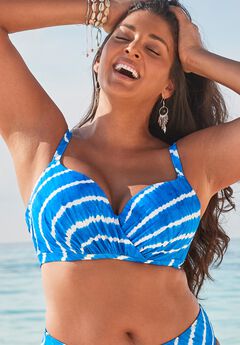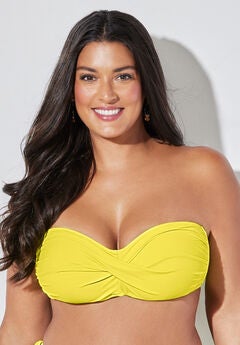


Supportive Plus Size Swimsuits
Explore supportive plus size swimsuits with your preferred coverage, comfort, and level of support in mind. One brand’s 1X can fit differently from another’s, and your stylist can help you navigate those differences. Try your picks at home, with free exchanges if you need to adjust your fit.
-
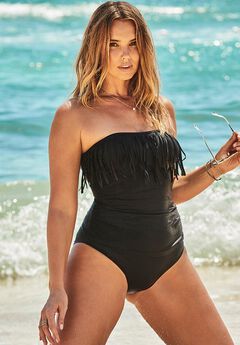
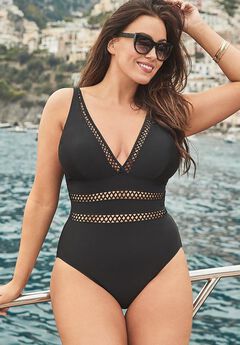
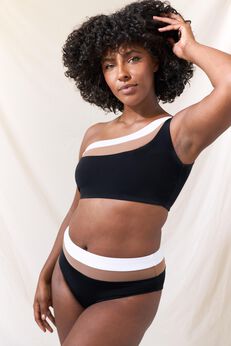
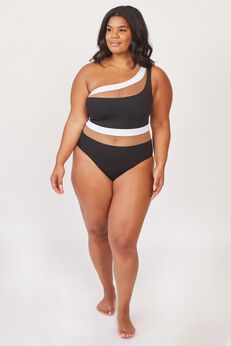 A black one-shoulder swimsuit with power mesh insets and UPF 50+ sun protection.
-
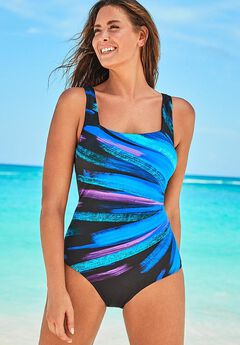
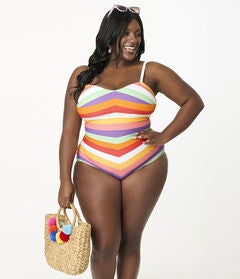 A vibrant one-piece swimsuit featuring rainbow stripes, a sweetheart neckline, and supportive mesh lining.
-
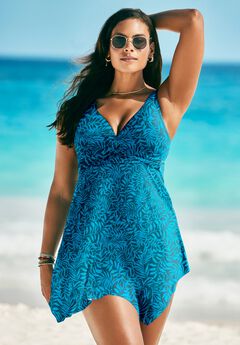
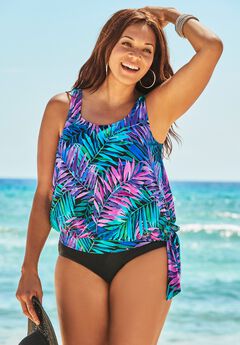
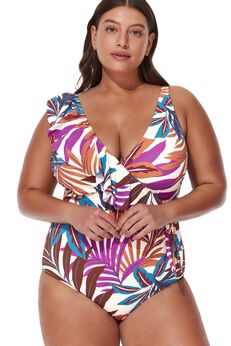 A vibrant multi-colored one-piece swimsuit featuring a ruffled surplice neckline, adjustable straps, and tummy control.
-
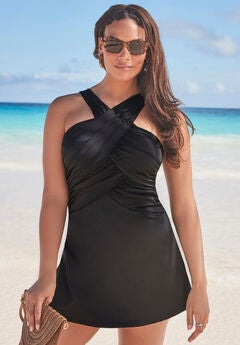
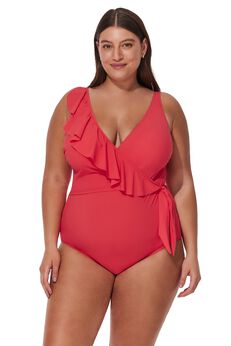 A chic black one-piece swimsuit with ruffle side tie, tummy control, and adjustable straps for support.
-
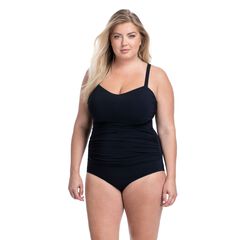 A black one-piece swimsuit featuring a sweetheart neckline, shirred detailing, tummy control, and adjustable straps.
-
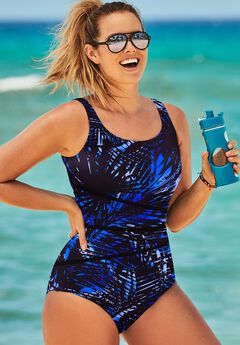
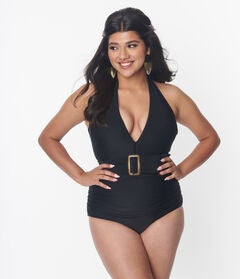 A sleek black halter swimsuit with a waist-cinching belt and padded cups for flattering support.
-
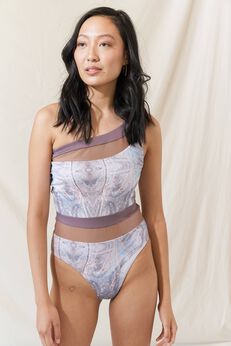 A stylish one-shouldered swimsuit with power mesh insets and UPF 50+ protection.
-
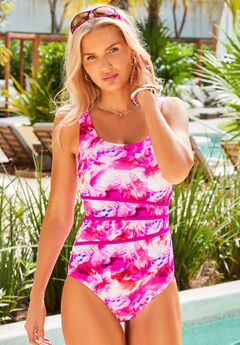 A sporty pink one-piece swimsuit with chlorine-resistant fabric, tummy control mesh, and UPF 50 sun protection.What customers like:Full coverage and tummy control Comfortable and stays in place Flattering and supportive fit Vibrant and beautiful colors Chlorine resistant and durable
-
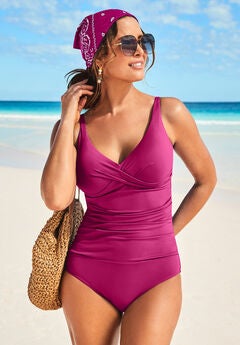 A one-piece swimsuit with a twist-front V-neck, tummy control, adjustable straps, and UPF 50 nylon-spandex fabric.What customers like:Flattering fit Comfortable design Tummy control features Quality material Adjustable straps
-
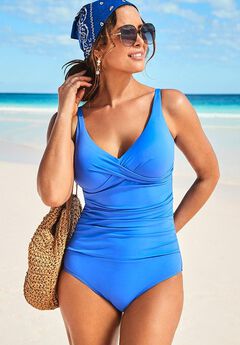
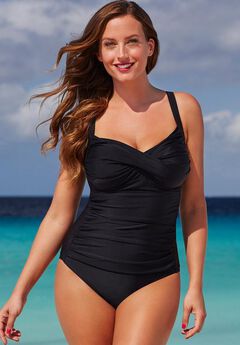 A black one-piece swimsuit with ruched details, twist-front neckline, and UPF 50 sun protection.What customers like:Quality fabric Flattering fit Clever ruching design Good support True to size
-
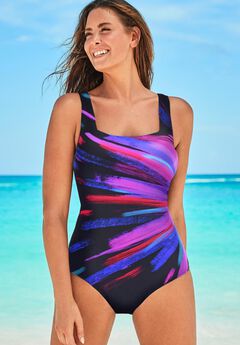 A vibrant chlorine-resistant one-piece swimsuit with tummy control and UPF 50 protection in colorful prints.What customers like:Vibrant color Chlorine resistance High quality material Sturdy built-in bra Comfortable fit
-
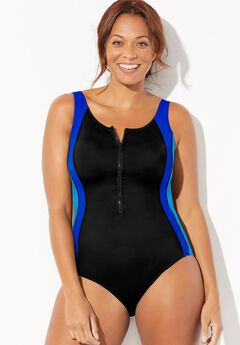 A chlorine-resistant one-piece swimsuit with tummy control, UPF 50 protection, and a functional front zipper.What customers like:Durable and high quality Perfect fit Flattering design Excellent support Easy to put on and take off
-
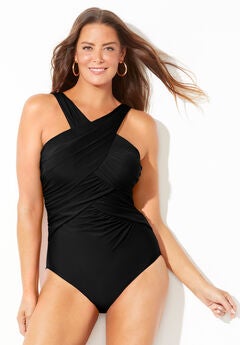 A black one-piece swimsuit with a high neck, tummy control, and UPF 50 sun protection.What customers like:Flattering fit Comfortable design High-quality fabric Vibrant color options Excellent coverage
-
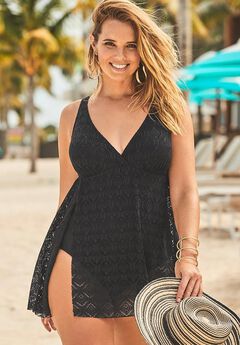
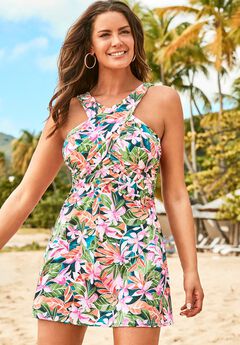 A flattering high neck swimdress with tummy control, UPF 50 protection, and adjustable straps.What customers like:High quality material Supportive design Vibrant colors Comfortable fit Flattering style
-
 A deep V-neck one-piece swimsuit with tummy control, underwire support, and UPF 50 protection.What customers like:Supportive underwire Flattering fit Comfortable design Tummy control Vibrant colors
-
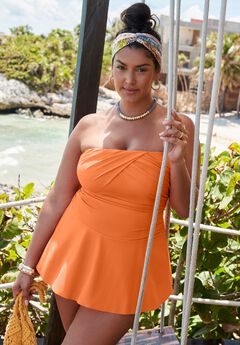 A chic bandeau swimdress with ruched details, flounce skirt, and UPF 50 sun protection.What customers like:Chic appearance Versatile strap options Flattering design Quality material Supportive fit
-
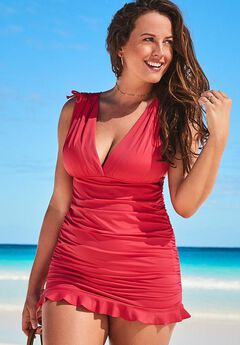 An elegant swimdress with a plunging neckline, Power Mesh lining, and UPF 50 protection.What customers like:High quality fabric Flattering fit Confidence-boosting design True to size Adjustable skirt length
-
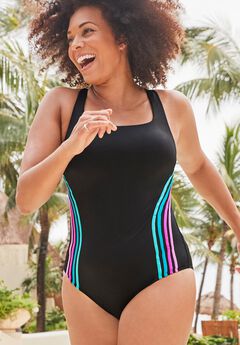 A chlorine-resistant one-piece swimsuit with tummy control and UPF 50 protection in vibrant stripes.What customers like:Chlorine resistance High quality Flattering fit Comfortable design Vibrant colors
-
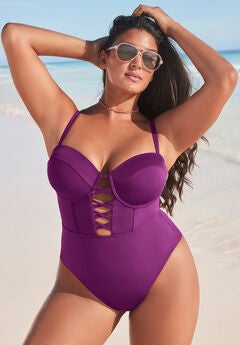 A stylish one-piece swimsuit with underwire support, tummy control, and UPF 50 protection.
-
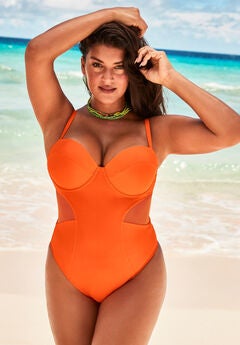 A stylish one-piece swimsuit with underwire support, sheer mesh accents, and adjustable back straps.
-
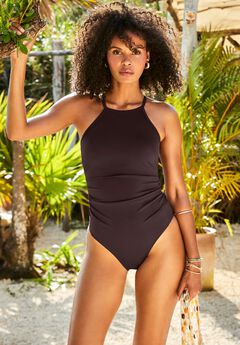 A high-neck one piece swimsuit in nylon-spandex with supportive Power Mesh and adjustable crossback straps.
-
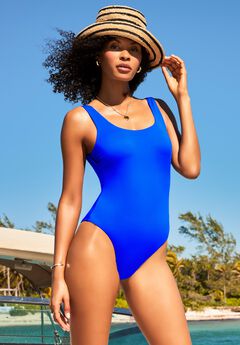 A royal blue one-piece swimsuit with a square neckline, scoop back, tummy control, and UPF 50 protection.
-
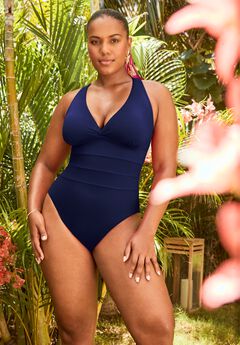 A navy one piece swimsuit with a V-neck, crossback straps, tummy control, and Power-Mesh lining.
-
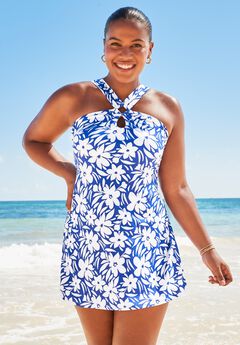 A royal blue swimdress featuring a high neck, square ring detail, Power Mesh support, and full coverage.
Supportive Plus Size Swimsuits
Frequently Asked Questions
Start with the silhouette you enjoy: a one-piece creates a continuous look, while a two-piece offers separate top-and-bottom styling. Tell your stylist your coverage preferences and favorite outfit shapes to help define your swimwear direction.
Scoop, square, V-neck, and high-neck designs each bring a different feel to your swimwear. Share your favorite everyday necklines with your stylist, and mention whether you prefer an open neckline or more coverage.
Look to your favorite clothes for a starting point, whether you gravitate toward solid colors, florals, or geometric prints. Your stylist can use those preferences to help you explore swimwear that feels connected to your personal style.
Pair your swimsuit with a wrap skirt or relaxed pants when your plans move from lounging to lunch. Let your stylist know whether your vacation wardrobe leans casual or dressed up, so your swimwear styling follows the same direction.
Clean lines and colorblocking can create a sporty feel, while ruching, wrap styling, and decorative accents can look dressier. Tell your stylist which details catch your eye and which you would rather skip.