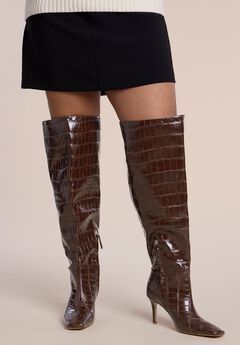
Plus Size Wide-Width Heeled Lace-Up Boots

Start with wide-width heeled lace-up boots to bring a Victorian-inspired touch to your fall wardrobe. A pointed toe and embossed finish add definition beside softer fabrics, without making your outfit feel costume-like. Your fit deserves just as much attention as your look: check foot width and shaft measurements separately. Then build around your boots with a favorite skirt, easy denim, or a dress you already love.

SORT BY

Sort By

Sort By

FILTER BY

Plus Size Wide-Width Heeled Lace-Up Boots

Plus size wide-width heeled lace-up boots bring together extra room across the foot, adjustable lacing, and added height. They can give your everyday jeans a more finished feel or add structure beneath a flowing dress. The right pair starts with understanding where you need room, rather than simply choosing a larger shoe size. Wide width describes the fit around your foot; wide calf describes the circumference of the boot shaft. Those measurements are separate, so a wide-width boot does not automatically provide extra space around your calf. Your stylist already knows that one brand’s wide fit can feel different from another’s. That knowledge helps keep your actual measurements and preferences at the center of your choices. Look at foot length and width alongside the brand’s size chart, then consider instep height and toe shape. A rounded or almond-shaped toe may give your toes more usable space than a sharply tapered shape. The interior fit still matters more than the outline, and your toes should not feel crowded together. Lace-up fronts let you adjust tension along the instep and ankle, or farther up a taller shaft. They cannot make a narrow sole wider, so tightness across the ball of your foot deserves attention. A tongue that pulls apart excessively or laces that must stay unusually loose can signal insufficient room. On styles with a side zipper, you can establish your preferred lacing tension and use the zipper for entry. Try your boots with the socks or hosiery you expect to wear most often. Your heel should feel secure without excessive slipping, while your toes have room to move naturally. Walk, sit, and bend your knees to notice pressure that standing still might not reveal. Your stylist can help interpret those details instead of leaving you to decode the size label alone. Trying your boots at home gives you space to assess the fit, with free exchanges if it needs adjusting.

Your choice of material shapes the look of your boots and the attention they need over time. Smooth leather brings a defined finish and can develop softer creasing with wear, depending on its construction. It should still feel comfortably fitted from the beginning; breaking in is not a remedy for pinching. Faux leather can offer a similar polished appearance, although its flexibility and care requirements vary by material. Suede and faux suede have a softer, matte texture that works beautifully beside denim, knits, and woven dresses. Their surface needs a different approach from smooth finishes, so follow the material-specific care directions. A suitable suede brush can lift surface dust, while many smooth synthetic uppers need only gentle wiping. Test any approved cleaner on an inconspicuous area before applying it across the boot. Avoid soaking the uppers or placing boots near direct heat to speed up drying. Let them air-dry naturally, and loosen the laces when removing them rather than pulling against the eyelets. Small habits help preserve the shape of the opening and reduce strain around closures. Check stitching, eyelet attachments, and the connection between the upper and sole when assessing construction. A reinforced heel counter can help the back retain its shape, while a padded collar may soften ankle contact. Inside, smooth lining and well-finished seams matter wherever your foot or leg touches the boot. Cushioning can make the footbed feel more comfortable, but it cannot compensate for the wrong width. Your heel choice matters just as much as the upper: a broad block heel offers a wider base than a narrow heel. Height, sole flexibility, and the angle of your foot all influence how the boot feels while walking. Textured outsoles may provide more grip than smooth ones, but traction depends on the surface and sole material. Your stylist can help balance these details with how much standing and walking your day involves.

Choose the shape of your heeled lace-up boots around the clothes you actually reach for. An ankle-height pair can sit neatly below straight-leg jeans, leaving the lacing visible when the hem moves. With wider trousers, check that the fabric falls freely over the shaft instead of catching on the top edge. A mid-calf style creates a stronger line beneath a midi skirt, especially when the hem leaves some separation. Taller lace-up boots can work beneath a dress, provided the shaft fits comfortably when you sit. Your stylist can help you judge those proportions without turning getting dressed into a set of rigid rules. Black offers a defined contrast against lighter fabrics, while brown tones can echo a belt or handbag. A softly textured finish keeps the combination relaxed; a polished surface gives the same outfit a dressier note. Laces themselves change the character, from fine cords on a refined ankle boot to sturdier ties on a chunkier shape. Decorative stitching and metal eyelets can add interest without requiring much else from your accessories. For an office day, a moderate heel and secure ankle fit may suit the walk between meetings. For dinner or a performance, a higher heel can be appealing if the fit remains comfortable throughout the evening. Longer outings call for particular attention to weight, footbed support, and how naturally you can take a full step. Your boots should suit your plans, not require you to shorten them because the fit feels wrong. If you are comparing silhouettes beyond lace-up heels, explore Plus Size Wide Width Boots with those same fit priorities in mind. Keep your stylist informed about pressure points, preferred heel heights, and the outfits you want to finish. Those details make your style profile more useful than a shoe size alone. The result is a more personal choice: boots with the shape you enjoy and room where you need it.

FAQ