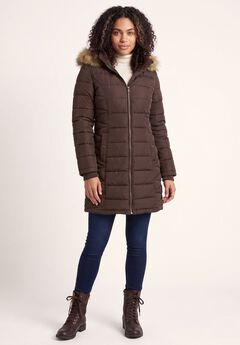
Women's Plus Size Green Coats
Explore women’s plus size green coats for an outer layer that brings color to your everyday wardrobe. Your stylist knows sizing varies by brand and can help you choose a fit with room for your usual layers. Try your picks at home, with free exchanges if you need a different fit.
-
 A forest green knit peacoat with a single-breasted design, lined for cold weather comfort.
-
 An emerald coat with brushed wool blend, wide lapels, gold buttons, and a matching tie waist belt.
-
 A green double-breasted trench coat with notched lapel and flap pockets, made from 100% polyester.
-
 A green, fully lined trench coat featuring a lapel collar, belted waist, and two slant pockets.
-
 A green, fully lined, double-breasted peacoat with a Peter Pan collar and two slant pockets.
-
 A green cotton fleece winter coat with drawstring waist, zipper closure, and practical pockets.
-
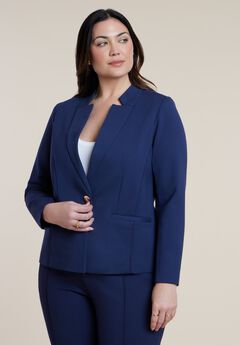 A tailored green blazer crafted from compact stretch knit for polished style and all-day comfort.What customers like:Versatile and stylish design Beautiful color options High quality, stretchy fabric Flattering and structured fit Comfortable for all-day wear
-
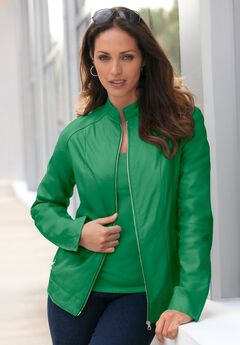 A genuine green leather jacket with princess seams, zip-front closure, zip pockets, and full lining.What customers like:Versatile and stylish design Beautiful and vibrant color options Soft, high-quality leather Flattering and comfortable fit Lightweight yet durable construction
-
 A chic olive green suede blazer with a shaped silhouette, notch collar, and front on-seam pockets.
-
 A collarless olive green jacket in bi-stretch polyester blend with a relaxed, fully lined silhouette.
-
 A soft blue-green wool blend coat with a wide notched collar, self-tie belt, and side pockets.
-
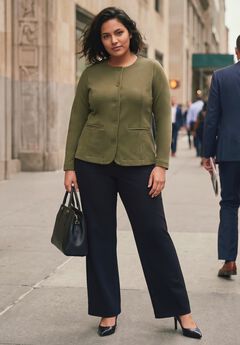 A modern olive green blazer in smooth ponte knit with a sculpted silhouette and polished button front.
-
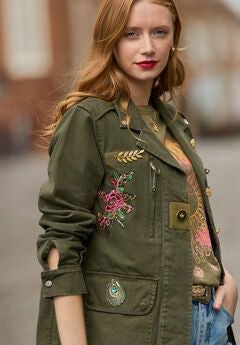 A green herringbone jacket featuring floral embroidery, embellishments, and utility-inspired patch and zip pockets.
-
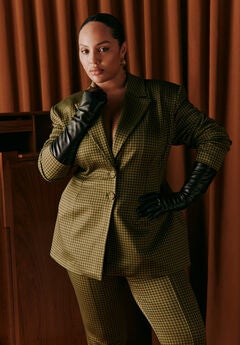 A green houndstooth blazer in stretch ponte with strong shoulders, notch lapels, and a sculpted hourglass silhouette.
-
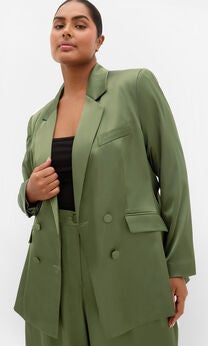 A sophisticated green faux satin blazer with classic lapels, shoulder pads, double-button closure, and a back slit.
-
 An elegant olive green cropped wrap trench jacket with quarter sleeves, split cuffs, and a tie waist.
-
 A green velvet wrap smoking jacket with satin lapel and belt, featuring seamed double stripe cuffs.
-
 A green quilted puffer jacket made from recycled polyester, perfect for cold weather.
-
 A lightweight green trench coat with a drawstring waist, waterproof lining, and zip closure.
-
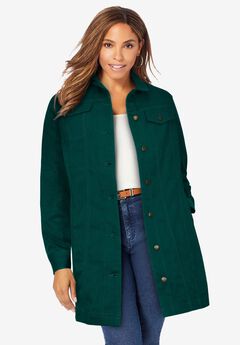 A green cotton long denim jacket featuring on-seam pockets and button cuff sleeves for versatile style.What customers like:Versatile and stylish design High quality and well made Deep and practical pockets Great length and coverage Flattering and comfortable fit
-
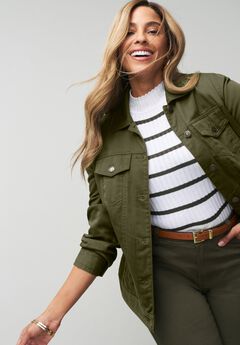 A relaxed-fit olive green cotton denim jacket with classic seaming, shirt collar, and practical pockets.What customers like:Stylish and timeless design Versatile style Attractive color options High quality construction Comfortable fit
-
 A timeless wool-blend coat featuring a shawl collar, notched lapel, and straight silhouette.What customers like:High quality and well made Flattering and classic silhouette Warm and comfortable True to size and good fit Versatile style and color
-
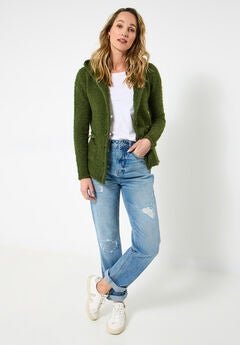 A cozy green hoodie cardigan with tortoise buttons, patch pockets, bow appliqué, and an attached hood.What customers like:Flattering and true to size fit Versatile and easy to wear High quality and well made Soft, comfortable fabric Beautiful color and design
-
 A cozy green sherpa jacket with a two-way zipper, attached hood, and shiny binding trim.What customers like:Lightweight and comfortable Soft sherpa material Warm and cozy Good fit and true to size Attractive design and appearance
Women's Plus Size Green Coats
Frequently Asked Questions
Start with cream, navy, gray, or black to give your green coat an easy supporting palette. Your stylist can help you add burgundy or blush accents when you want a little more contrast.
Look at the colors you reach for most often before choosing your coat's shade of green. Olive pairs naturally with denim and warm neutrals, while forest green complements navy, charcoal, and cream. Your stylist can use your style profile to help narrow the choice.
Pair your green coat with your favorite jeans, a simple top, and sneakers for an easy everyday outfit. Your stylist can help you choose between coordinating layers and contrasting colors, depending on how much you want your coat to stand out.
Wear your green coat over tailored trousers and a blouse for work, or a simple dress for dinner. Keep the layers underneath in a coordinated color palette, and let your coat bring personality to your outfit.
Choose one accessory to lead, such as a patterned scarf or a bag in a contrasting color. If your scarf includes green, repeat your coat's shade for an easy connection. Your stylist can help you build combinations around accessories you already love.