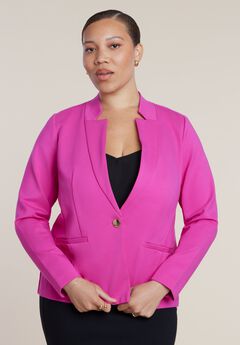
Plus Size Blazers And Jackets
Find plus size blazers and jackets to finish work outfits or layer over your everyday favorites. Your stylist knows one brand’s 1X can fit differently from another’s and picks with your fit in mind. Try your pieces at home with your own clothes, with free exchanges if the fit isn’t right.
-
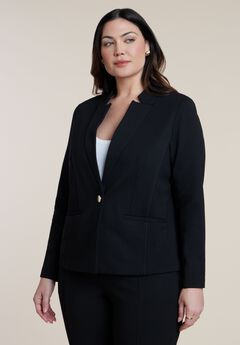 A tailored black blazer in stretch knit with a single button closure and notch lapel.What customers like:Flattering fit High quality material Versatile style Comfortable stretch Professional look
-
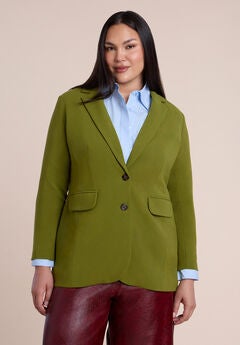 A classic tailored blazer in soft, slightly stretchy woven double cloth with welt flap pockets and full lining.What customers like:Flattering and tailored fit Perfect for work and multiple occasions High quality and well-made Versatile styling and color Comfortable with soft, stretchy fabric
-
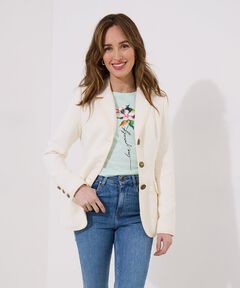 A smart polyester blazer with a suede moleskin collar, side pockets, and bold button details.What customers like:High quality and well made Versatile style Flattering and stylish appearance Beautiful color and unique details Comfortable fit
-
 A black polyester-blend blazer with a relaxed fit, notch collar, deep V neckline, and striped lining.What customers like:Chic, modern look with stylish lining Roomy and comfortable fit High quality fabric and construction Flattering and slimming silhouette Versatile styling for many occasions
-
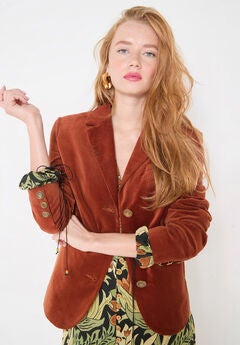 A regal cotton-spandex blazer in moleskin with red button stitching, notched lapel, and printed lining.What customers like:Versatile and stylish for multiple seasons High quality materials and construction Flattering and excellent fit Beautiful color and design Comfortable and cosy
-
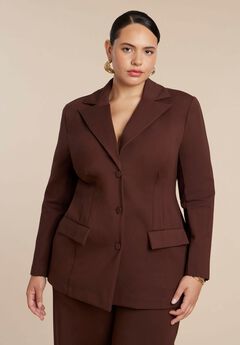 A close-fit black blazer in stretch compact knit with notch lapel and single-breasted button closure.
-
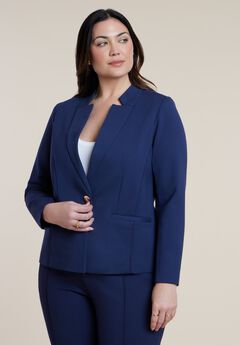
 A navy suede blazer with a flattering silhouette, notch collar, button-front closure, and side pockets.
-
 A black peplum blazer with a ruffle hem and V-neck, made from polyester and spandex.
-
 A sleek black blazer with a slim fit, 2-button closure, and cool hand fabrication.
-
 A sleek black blazer with superstretch fabric, offering a flattering fit and effortless elegance.
-
 A relaxed-fit black blazer with a single button-front, faux pockets, and back vent.
-
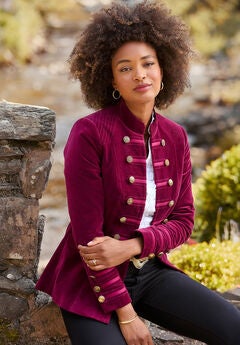 A striking faux suede military jacket with gold dome buttons, flap pockets, and a flattering straight silhouette.
-
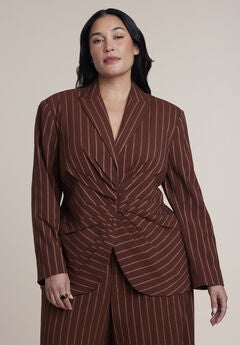 A striped, cinched-waist blazer with strong shoulders, relaxed fit, and fully lined non-stretch woven fabric.
-
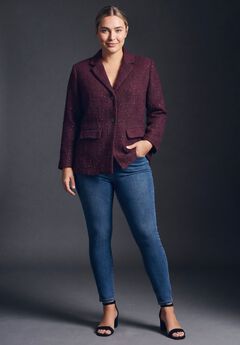 A relaxed textured sequin tweed blazer with notched lapels, two-button closure, long sleeves, and patch pockets.
-
 A lightweight rayon cropped blazer with a tie front and double-pleated back, perfect year-round.
-
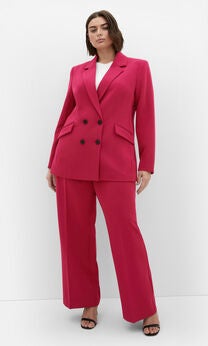 An oversized deep rose blazer in a polyester blend with classic lapels, double button closure, and pockets.
-
 A dark cherry stretch ponte blazer with a collared neckline, dual button closure, and functional pockets.
-
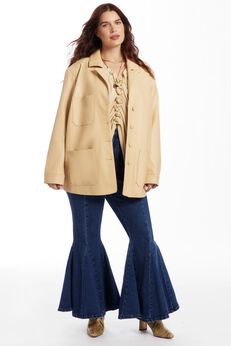 A sleek black faux leather blazer with bold shoulders, sculpted lapel, and functional front pockets.
-
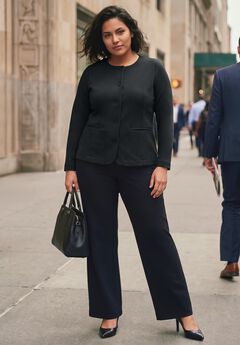 A black ponte blazer with a sculpted silhouette, polished button front, and cozy double-knit fabric.
-
 A relaxed red knit blazer cardigan with notch lapel, patch pockets, and a soft, fine-knit texture.
-
 A black double-breasted blazer with breathable coolhand fabric, perfect for stylish comfort in plus sizes.
-
 An oversized white and grey pinstripe blazer in woven twill with strong shoulders and notch lapel.
-
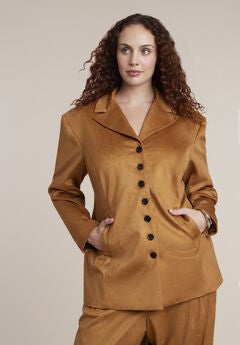 A brown faux suede jacket featuring strong shoulders, notch lapels, princess seams, and a polished tailored silhouette.
-
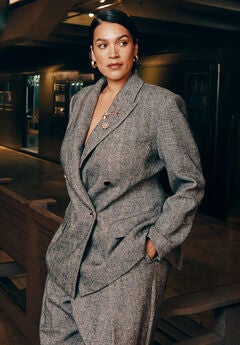 A tailored wool-blend herringbone blazer with strong shoulders, wide peak lapels, and a double-breasted closure.
Plus Size Blazers And Jackets
Frequently Asked Questions
A blazer is a type of jacket with tailored details, often including lapels and a structured shape. Jackets cover a broader range of styles, from denim layers to cropped silhouettes. Your stylist can help you choose based on your routine and how dressed up you like to feel.
Pair your plus size blazer with trousers and a simple blouse for an easy workday outfit. Try it over a dress when you want fewer pieces to coordinate. Your stylist can help you build combinations that match your workplace and your personal style.
Wear your blazer with jeans and a favorite tee to bring a little polish to everyday dressing. Add sneakers for a relaxed finish, or choose loafers when you want something more put together. Your stylist can help you balance tailored details with your casual favorites.
Start with the mood of your dress: a denim jacket keeps things casual, while a blazer adds polish. A cropped jacket can leave more of your dress visible, especially with a defined waist. Your stylist can suggest pairings based on the dresses you already love wearing.
Start with a simple base layer, then add your blazer or jacket as the weather shifts. Wear it open over a tee on milder days, or layer it over a fine-knit sweater when temperatures dip. Your stylist can help you plan combinations around your climate and daily routine.