Plus Size Long Sleeve Midi Dresses
Find plus size long sleeve midi dresses with the arm coverage and below-the-knee length you’re looking for. Your stylist knows one brand’s 1X can fit differently from another’s, so you’re not navigating sizing alone. Try your picks at home, with free exchanges if you need a different fit.
-
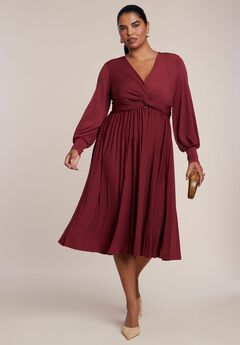
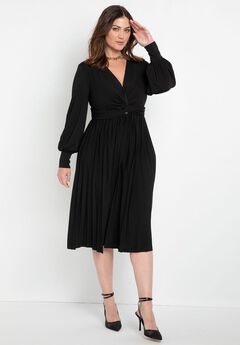
 A close-fitting midi dress featuring a cross front twist and long sleeves in stretch matte jersey.What customers like:Flattering fit Chic and classy look Comfortable wear Versatile design High-quality fabric
-
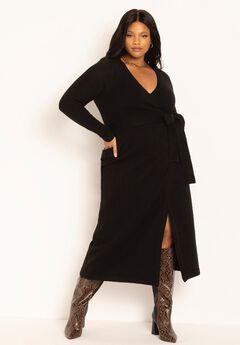 A black midi-length wrap dress in stretch sweater yarn with long fitted sleeves.What customers like:Soft and cozy Elegant appearance Versatile style Flattering length Comfortable fit
-
 A retro-inspired midi dress featuring a stretch-smocked bodice, tiered full skirt, and blouson sleeves.What customers like:Flattering fit and design Comfortable and stretchy smocked bodice Stylish and receives compliments Versatile for different occasions Lightweight and airy fabric
-
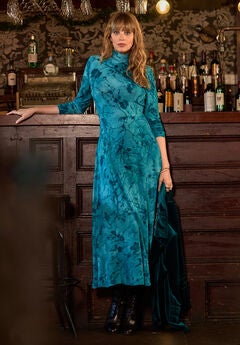 A striking flocked print midi dress with long sleeves, side pockets, and a back keyhole detail.
-
 A long sleeve, boat neck midi dress in stretch knit plissé with a relaxed bodice and side slit.
-
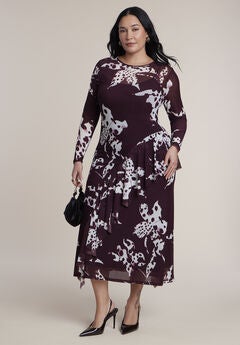 An eye-catching printed midi dress in high-stretch knit mesh with a jewel neckline and long fitted sleeves.
-
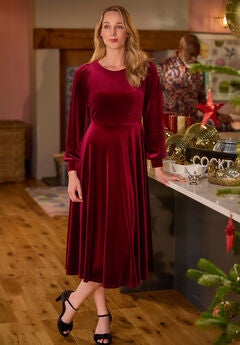 A luxurious polyester-spandex velvet midi dress with a straight silhouette, balloon sleeves, and banded cuffs.
-
 A fitted midi dress in stretch rib knit with a button-down front and collared neckline.
-
 A navy midi dress featuring flowing shoulder capes, stretchy bodycon fit, and soft polyester-spandex fabric.
-
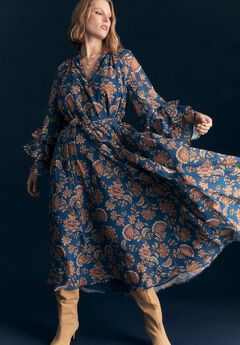 A midnight chiffon midi dress with a relaxed A-line silhouette, ruffled sleeves, and a removable tie waist.
-
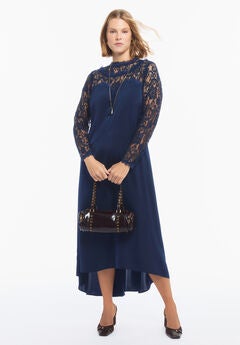 A romantic blue satin midi dress with sheer lace sleeves, a ruffled neckline, and softly gathered waist.
-
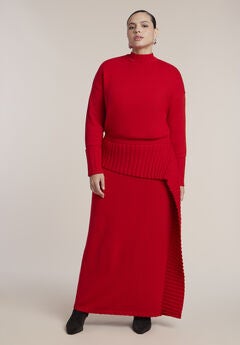 A red stretch-knit midi dress featuring a relaxed bodice, fitted skirt, ribbed foldover panel, and hardware.
-
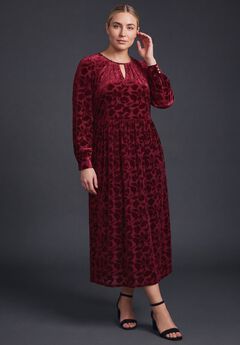 A burgundy velvet burnout dress with a keyhole neckline, blouson sleeves, elastic waist, and side pockets.
-
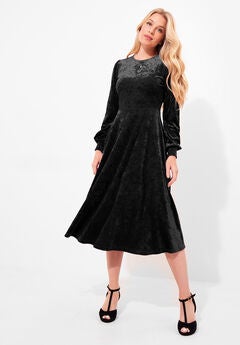 A luxurious black crushed-velvet midi dress with an A-line silhouette, balloon sleeves, and crew neckline.
-
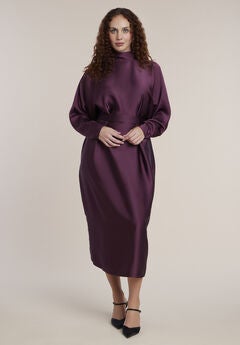 A dramatic satin midi dress with a draped mock neckline, dolman sleeves, removable belt, and back hem slit.
-
 A black-and-white rib-knit midi dress with flounced long sleeves, ribbed collar, and functional half-button placket.
-
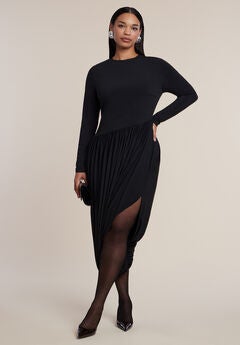 A black midi dress with an asymmetric high-low hem, shirred waist, draped front, and stretch jersey.
-
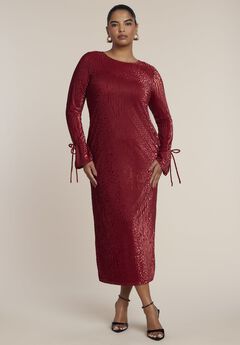 A burgundy animal-print burnout velvet midi dress with stretch knit, sheer accents, and drawstring cuffs.
-
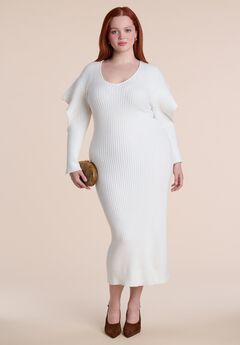 A fitted rib-knit midi dress with embellished split sleeves and functional button cuffs.
-
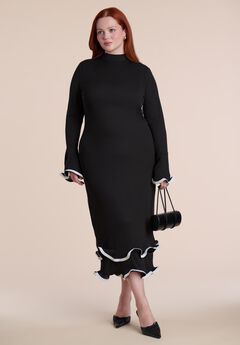 A black-and-white ribbed knit midi dress with long sleeves, mock neckline, and structured tiered ruffle hem.
-
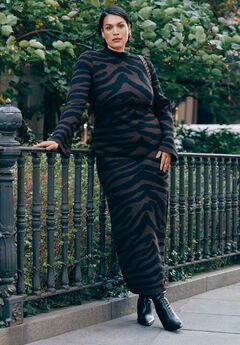 A stretch-knit midi dress with a close-fitting silhouette, mock neckline, flared sleeves, and intarsia pattern.
-
 An enchanting onyx velvet wrap dress with cascading flounces, perfect for formal events and weddings.
-
 A black stretch crepe midi dress with lantern sleeves and a V-neckline for versatile elegance.
-
 A satin wrap dress with long sleeves and a high-low ruffled hem in elegant onyx.
Plus Size Long Sleeve Midi Dresses
Frequently Asked Questions
Pair your dress with clean sneakers and a crossbody bag for an easy, pulled-together outfit. Tell your stylist about your routine so your box reflects how you actually get dressed.
Try ankle boots for everyday plans, loafers for work, or dressy flats for an evening out. Your stylist can help you choose a pairing that feels natural with your personal style.
Layer your dress with a tailored blazer, then add loafers for a polished workday look. Share your office dress code with your stylist so your outfits suit your usual schedule.
Add tights, boots, and a long coat to keep your dress in rotation as temperatures drop. Ask your stylist to consider your favorite outerwear when planning outfits around your dress.
Choose one focal point, like statement earrings or a pendant that complements your dress’s neckline. Your stylist can help you build around jewelry you already love, keeping the outfit distinctly yours.