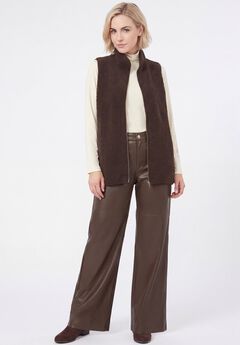
Plus Size Women's Sweater Vests

Explore plus size women's sweater vests for an extra layer over your favorite shirts, tees, and dresses. Your stylist can help you find the right fit—one brand's 1X isn't always another's. Try your vest with the pieces you already own at home, with free exchanges if you need a different fit.

SORT BY

Sort By

Sort By

FILTER BY

Plus Size Women's Sweater Vests

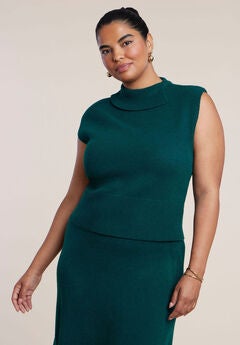
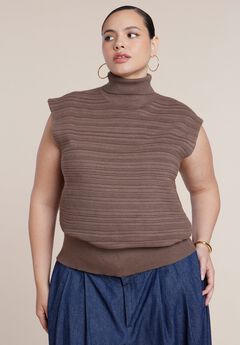
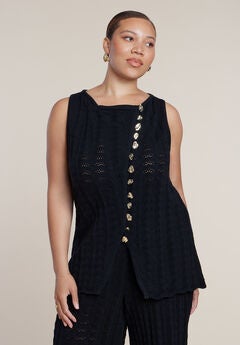
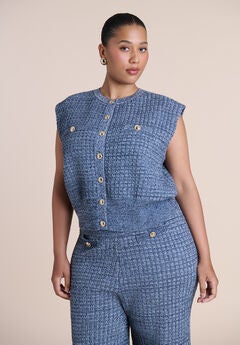
Plus size women’s sweater vests are sleeveless knit tops that bring texture and shape to layered outfits. V-neck, crewneck, cable-knit, pointelle, and button-front designs each offer a different way to finish your look. Their appeal is practical, too: you can add another layer without fitting knit sleeves over your shirt. A V-neck leaves space for a pointed collar, a pendant, or the neckline of your favorite tee. A crewneck creates a more continuous line across your chest and pairs easily with a close-fitting base. Cable knitting brings raised texture, while fine-gauge stitches keep the surface smoother beneath a blazer. Pointelle patterns introduce small openings that let the color of your base layer become part of your outfit. Your stylist can help you decide whether that contrast should feel subtle or make a statement. A cream knit over a striped shirt feels different from a dark vest over a matching tee. Both approaches give familiar pieces another purpose without requiring a completely different wardrobe. For an office day, a vest can connect a crisp button-down with straight-leg trousers and loafers. For a museum visit or lunch with a friend, denim and a soft tee make an easy foundation. A longer silhouette can extend below your waistband, while a cropped shape leaves high-rise waistbands visible. Peplum hems add movement below the waist, especially when the knit has enough flexibility to drape. Your preferred proportions, daily plans, and existing clothes give your stylist a useful starting point. Pullover styles keep the front uninterrupted, while button closures let you adjust the neckline and opening. Explore Plus Size Button Vests if that adjustable front is a detail you enjoy in your layers. Worn open, a button-front vest also gives a printed blouse room to remain part of the outfit. Your stylist can connect those details with pieces you already reach for, so your vest feels familiar from its first outing.

Your sweater vest’s fit starts with how you plan to wear it, not just the size label. Size is just a number: one brand’s 1X might be another brand’s 3X. Your stylist already understands those differences and can consider your measurements alongside each garment’s cut and proportions. A vest intended for a fitted tank needs different layering room than one worn over a cotton shirt. The useful measurements include the bust, shoulder width, armhole depth, and length from shoulder to hem. A shoulder seam that extends well beyond your shoulder creates a different silhouette from a narrower cut. Neither is automatically better; your stylist can help distinguish an intentional shape from a fit that feels awkward. Armholes deserve particular attention because they affect both coverage and how smoothly your base layer sits. A deeper opening may accommodate a fuller blouse sleeve but reveal more of the shirt underneath. A closer opening creates a neater edge, provided it does not catch or bunch your sleeves. Across your chest, the knit should have the ease you prefer without making movement feel restricted. On button-front designs, pulling between fasteners can indicate that your layering combination needs more room. Ribbed hems also change the fit: some rest loosely, while others draw the knit inward. A band that settles at your waist creates a different effect from one that catches above your hips. Your stylist can factor in where you like your tops to end when sitting or standing. Try your vest with the actual shirt and pants you expect to wear, rather than an unrelated base. Reach toward a shelf, sit at your desk, and notice whether the neckline or hem needs repeated adjusting. Those everyday movements reveal more than a quick look in the mirror, especially when your outfit includes several layers. Share those details with your stylist so your preferred fit becomes part of your style profile.

Materials influence how your sweater vest drapes, feels against your skin, and holds up to repeated wear. Cotton knits often have a familiar, breathable feel, though their weight varies considerably with stitch and yarn thickness. A substantial cotton cable knit behaves differently from a fine cotton blend with a softer drape. Wool fibers have natural resilience, while softness depends on the fiber type and how the yarn is processed. If you are sensitive to texture, tell your stylist where a neckline might touch your skin. Acrylic and polyester blends can offer easy-care options, but the care label remains the authority for each garment. Rayon blends often lend fluidity, while added stretch can help ribbing recover after movement. Fiber content is only part of the picture; construction matters just as much for durability. Look for secure shoulder seams, even stitching, and neckbands that lie smoothly without looking stretched. Buttonholes should have tidy edges, with buttons attached securely enough to handle regular fastening and unfastening. Friction from a shoulder bag or repeated contact at your sides can cause pilling in many knits. A fabric comb or sweater shaver may help, provided the care instructions permit that treatment. Open stitches and raised cables also need care around jewelry, bag hardware, and rough surfaces that could snag. Follow the garment label before washing, since similar-looking sweater vests can require different care methods. When washing is permitted, gentle handling and a suitable detergent help protect the knit’s surface. Reshape and dry flat when directed, rather than hanging a damp vest by its shoulders. Folding your knitwear for storage helps avoid the shoulder marks and stretching that hangers can leave. For a gift, a sweater vest makes particular sense when you know the recipient’s layering habits and texture preferences. For your own wardrobe, let your stylist handle the sizing differences and help connect fabric, fit, and everyday use. Try your selections at home with familiar clothes, without relying on a fitting-room impression alone. Free exchanges give you room to resolve a fit mismatch without feeling pressured to make the first size work.

Frequently Asked Questions