


Plus Size Women's Underwire Bras
Explore plus size women’s underwire bras for structured support, keeping both your band and cup fit in mind. Look for a secure band and wires that sit comfortably around your bust without digging. Bra sizing can vary between brands, and your stylist can help you navigate those differences. Check your fit at home, with free exchanges if you need a different size.
-
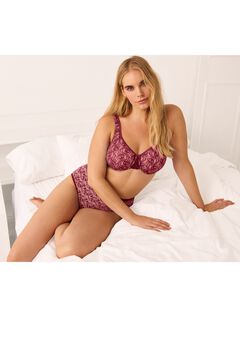 A full coverage underwire bra with adjustable padded straps, lace accents, and stretchy nylon-elastane fabric.
-
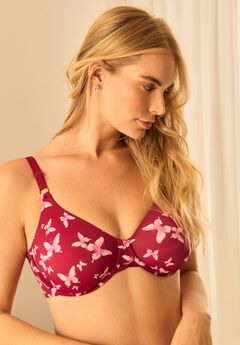 A seamless, underwire bra with mesh lining and molded cups for smooth, comfortable back support.
-
 A navy front-closure bra with cushioned underwire, offering full coverage and adjustable straps.
-
 A vintage-inspired white bra with floral embroidery, satin pintucks, and supportive underwire for all-day comfort.
-
 A black lace underwire bra with cushioned Wonderwire and extra-wide padded straps for comfort.
-
 A chic black underwire bra with embroidered tulips, offering full coverage and a supportive fit.
-
 A black floral lace balconette bra with mesh lining, underwire support, and adjustable contouring straps.
-
 A bold balconette with sheer Power Mesh, flexible underwire, and adjustable gold hardware straps.
-
 A luxuriously soft Modal bra offering smooth, supportive shaping with breathable stretch and flexible underwire.
-
 A black front-closure bra with underwire and seamless adjustable straps for all-around smoothing support.
-
 A white stretch lace bra with a secure front clasp, adjustable straps, and exclusive underwire.
-
 A red strapless underwire bra with versatile straps and silicone strips for secure, comfortable support.
-
 A sexy black stretch-lace underwire bra with a front-close design and adjustable straps.
-
 A supportive underwire bra with jacquard design, cushioned straps, and a pink ribbon for awareness.
-
 A black lace bra with padded underwire, offering full coverage and adjustable straps for comfort.
-
 A black T-back underwire bra offering full support with adjustable straps and a front snap closure.
-
 A black underwire plunge bra featuring graphic Italian corded lace, sculptural lines, and gold-tone accents.
-
 A sheer, unlined balconette bra in Ocean-hued Toile print with supportive power mesh and gold hardware.
-
 A deep V black bra in soft, sheer botanical lace with lightweight underwire and adjustable gold hardware.
-
 A soft, sheer botanical lace bra with a curved neckline, lightweight underwire, and adjustable gold hardware.
-
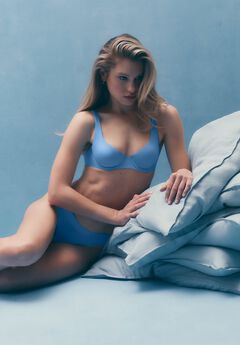 A silky microfiber unlined underwire bra with a rounded neckline, seamless shaping, and adjustable straps.
-
 A soft, sheer, and lightweight bra in trellis-stitched lace with flexible underwire and gold hardware.
-
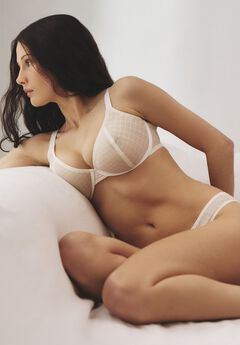 A deep V bra in soft trellis-stitched lace with lightweight underwire and adjustable gold hardware.
-
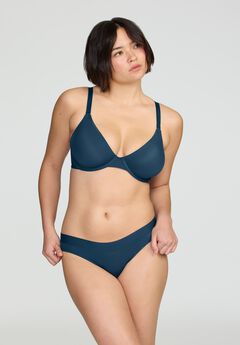 A deep V silhouette bra in ultra-soft Austrian Modal with flexible underwire and gold hardware accents.
Plus Size Women's Underwire Bras
Frequently Asked Questions
Common underwire bra styles include plunge, balconette, and full-coverage designs, each with a different neckline. Start with the tops you wear most, and let your stylist help you explore styles that complement your wardrobe.
Use your top’s neckline as your starting point: plunge styles pair naturally with V-necks, while balconette styles complement square necklines. Your stylist can help you consider the bra’s cup shape and strap placement alongside your favorite tops.
Build your color palette around the clothes you reach for most, then add shades you enjoy wearing. Coordinate your bra with your outfit for a tonal look, or choose a contrasting color when you want an intentional peek.
Treat your bra as part of your outfit rather than an afterthought beneath your blouse. Choose a similar color for a coordinated look, or try contrast for a more expressive combination. Your stylist can help you balance that detail with your other layers.
Your bra and underwear can coordinate without being an exact matching set, so start with what you enjoy. Connect them through a shared color, pattern, or decorative detail. Your stylist can help you build combinations that feel personal rather than overly matched.


